12 July 2005

Dog Days

Oh, the monotony. . .

I'm too busy to write much of substance today, and I'm not in a frame of mind to try to be provocative. I'm very sorry to add to the ennui of what is shaping up to be a bad blogweek. Both the Thinklings and Li'l Brudder's Tavernfolk are already pretty high strung, though (see below). So if you're looking for something spell-binding, give them a visit. In one place they're fighting like schoolgirls, and in the other, they're posting about their schoolgirl crushes. No way I want to try to compete with that.

Meanwhile—

Here's some quick BlogSpotting to tide you over, at least until tomorrow:

BlogSpotting
Now, finally...

Phelps alert:

A word of caution is in order about a certain person who has sometimes commented on posts at PyroManiac under assorted pseudonymns since our launch on June 1. Now she appears to have begun a blog of her own. (It's actually the latest of several abandoned blog-attempts from this deeply troubled individual). Unfortunately, her new blog contains material too blasphemous to link to. Her writing has the distinct flavor of things that have been said and published elsewhere by the infamous Phelps klan of Topeka, KS, and it is my strong suspicion is that she is somehow aligned with that family-cult. If you have never heard of them, consider yourself fortunate. Their website and their activities are a serious blight on the reputation of Christ's church. I bring it up to say I will delete any future comments posted by this person, and I would appreciate it if other commenters would refrain from knowingly engaging her in debate or dialogue of any kind in the comments sections of my blog. Thanks.

The infamous Phelps Web site has long contained a link to The Spurgeon Archive. I am embarrassed by this, but there's little I can do to stop them from linking to Spurgeon. In response, I have given them a link in the "Really, Really Bad" section of my bookmarks. I have encountered Phelps family members on line in various forums before, and both the tone and the results of their contributions to any discussion or debate are always the same as the placards they hold up at their infamous protests: utterly profane and perfectly fruitless.

"These are spots in your feasts of charity, when they feast with you, feeding themselves without fear: clouds they are without water, carried about of winds; trees whose fruit withereth, without fruit, twice dead, plucked up by the roots; raging waves of the sea, foaming out their own shame" (Jude 12-13).

Update: The woman with the blasphemous blog has responded with a denial that she is in any way associated with Fred Phelps. I believe her, because I don't think a Phelps would have enough moral fibre to be properly ashamed. (I once encountered one of the Phelpses using a pseudonymn in a theological forum and confronted her. She was more than happy to admit who she really was.) It would also seem quite out of character for a Phelps to masquerade as a Presbyterian.

It's actually even more disturbing, however, to think that there is someone so unbalanced outside the walls of the Phelps compound. What's worse is that this person claims to reside not far from where I live.


11 July 2005

Monday Menagerie VI

My dinner with a true hero of the faith
Revised edition posted at 5:00 pm. HT and many thanks to Noel Piper.

PyroManiac devotes Monday space to esoteric and offbeat things, in the hope that these will supply learning experiences for us all.

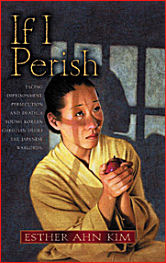
Cindy Swanson's recent interview with Noel Piper reminded me of someone whom I had not thought of in a long time: Esther Ahn Kim. She was one of my favorite authors when I was a manuscript editor at Moody Press. (Her Korean name was E-Sook Ahn. She liked the biblical roots of the Anglicized version.)

When Esther was a young woman, she was interned and tortured for six years in a Japanese prison. A young schoolteacher just before the outbreak of World War II, she was singled out during the Japanese occupation of her native Korea because she refused to bow at a Shinto shrine.

Esther was a committed Christian and understood that a public display of idolatry—especially under duress—would dishonor Christ and severely hurt her testimony to her countrymen who were not Christians. So in an action reminiscent of Shadrach, Meshach, and Abednego, she boldly and resolutely remained standing alone in a crowd of thousands of people who submissively bowed on command. As a result, she was consigned to a Japanese detention camp under the most degrading and dehumanizing circumstances until the end of the war. What sustained her and kept her mind busy and full of hope during those bleak and lonely years was meditating on the Scripture she had memorized.

If I PerishHer remarkable life story (If I Perish) was originally published in 1977 by Moody Press. It was one of the first books I ever edited. (I began my career in publishing in the summer of '76, and the cover copy that was used on the dust jacket of Esther Ahn Kim's book is one of the earliest things I ever wrote that was actually published.) If I Perish is a profoundly moving story of remarkable faith and courage, and Esther Kim was a living example of the goodness of divine providence.

After the war, Esther married Kim Dong-Myung (Don Kim), and they moved to America so that he could study for full-time ministry. While students at Southwestern Baptist Theological Seminary, they were appointed as Southern Baptist home missionaries. Together they founded Berendo Street Baptist Church in Los Angeles (still considered the "mother church" of Southern Baptist Korean congregations). Countless Korean church leaders trained there and were disseminated all over the United States. In the 1970s, Esther committed her life story to book form, and Moody Press was fortunate to publish it.

About the time her book was released, Mrs. Kim came to Chicago and visited Moody Press. I don't remember what circumstances kept Don Kim from accompanying her on that trip, but I recall that she was traveling alone and needed someone to help her with transportation while she was in Chicago.

I normally relied exclusively on the Chicago Transit Authority and my own feet for transportation in those days. But since I was officially Mrs. Kim's editor, Moody Press lent me a company car and assigned me the task of transporting her around Chicago for the day. Chicago was unfamiliar to her, but she had several longtime friends from Korea who now lived in Chicago. She had their addresses, and it was my privilege to chauffer her around the city so she could visit these old friends.

She was a very elegant woman, gracious, dignified, and Christlike. Having worked in detail through her life story, I was in awe of this truly great woman. Unfortunately, parts of the day were extremely awkward, mainly because of language and culture barriers. She actually spoke English quite well, but because of her Korean accent, I didn't always understand her the first time, and I kept having to ask her to repeat herself. On top of that, I knew nothing of Korean culture or history, so my attempts to make conversation were clumsy at best. She remained very gracious and polite, but I'll bet she was sick and tired of me before mid-afternoon.

That evening, her last stop was at a Korean restaurant not far from Wrigley Field, right in my neighborhood. She had an old friend who owned and operated the restaurant, and she would be spending the night at that friend's house. My plan was simply to drop her off, return the car, and go home.

But Mrs. Kim graciously invited me to stay and have dinner with her. She wanted me to try Korean food. At the time, Taco Bell burritos were about as far as I had ever ventured into "non-American" food. I knew absolutely nothing about Korean food. (I think that fact had come out pretty clearly in one of my bungled attempts at making small talk.) The woman who owned the restaurant was apparently such a close friend that Mrs. Kim didn't even ask if it was OK to invite me along. She more or less insisted that I must stay and have dinner with them.

Indeed, the friend who owned the restaurant seemed delighted to have me as a guest. Without showing me a menu or asking what I liked, she bustled off into the kitchen. After a very short time (no more than 10-15 minutes) she came back with about four waiters carrying an amazing feast. There were at least twelve courses. It was far more food than I could eat. It would have been enough to keep me going for a week. The best I could do was sample most of the dishes she had prepared.

And the food was absolutely splendid. There was some BBQ beef that was the best I have ever tasted, even to this day. I also had my first taste of kimchi that evening—several varieties, as I recall, all spicy and all delicious. I don't even remember everything they served me at that meal. I do recall vividly that it was all superb.

What I remember best was the soup. Mrs. Kim herself prepared a serving for me, filling a sizable bowl from a large stockpot brought by the waiters. I noticed that she seemed to be taking care to ladle out the best bit of meat and make sure that this one particular morsel was part of my portion. I thanked her effusively as she handed me the bowl of soup she had so specially prepared for me. It had a wonderful aroma. She was obviously enjoying feeding this young single guy whom she probably assumed never ate very well. (Aa a matter of fact, in those days I was training for a marathon, so believe it or not, I looked pretty malnourished.) She was visibly eager for me to try the soup, so I picked up a spoon and immediately began to sample the broth.

That's when the morsel she had so carefully selected for me floated to the top. It was a fish head, eyes still intact and looking at me with a glazed expression. My surprise must have registered on my face, because Mrs. Kim quickly assured me that the fish head was there on purpose, that it was completely edible, and that she considered it the best part of the soup. Not wanting to offend her, I ate the soup, and even tasted the fish head.

That was the moment when the cross-cultural awkwardness disappeared and Mrs. Kim became a friend for life. I only saw her a couple of times after that, but we had forged this unbreakable bond, and it was clear she genuinely liked me. The feeling was mutual.

It was an important lesson about breaking down cultural barriers, and I have often put it to good use on the mission field. Almost every culture has some delicacy or another that the typical American will politely turn his nose up at. I've found if you are willing to try new things, and show a sincere interest in whatever aspects of culture or cuisine your instincts might tell you to turn away from, you can quickly sweep aside the awkwardness of clashing cultures.


10 July 2005

Salmagundi

Leftovers from a week to remember:

  • Turns out the first three bombs exploded almost simultaneously. The "official" timeline, cited in the note I added to my Day Seven post, was wrong.
  • Steven King (features editor of the Belfast Telegraph, who is a totally different kind of writer from horror novelist Stephen King) was in London during the terrorist attacks, and he wrote a fascinating personal account. (HT to Peter Epps, who helped sort out the facts on this one.)
  • Here's another personal account of the London bombings that particularly interested me. It's by Jon Mackenzie, who was in town to attend the same conference Darlene and I had come to London for. (As a matter of fact, Jon was very graciously bringing me a bag of Minstrels, which I hope he enjoyed. He needed them more than I did anyway. And, after all, it's the thought that counts.)
  • To those who have complained because my negative assessment of "Live 8" was so wantonly and callously inattentive to the normal conventions of political correctness, I want to remind you that just the day before, I had made a post in favor of whirled peas.
  • All week, I was continually asked to give my opinion of the "emerging church" movement. Here's the short answer: I think it's little more than the twenty-first century equivalent of "The Church of What's Happenin' Now," and the movement's true patron saint is Reverend Leroy. You can put whatever pretentious mask you want on it; you can dress it up in a tweed jacket with a pipe and teach it to speak in avuncular tones; or you can put it behind a pasty-white complexion and dress it in Gothic black with a full array of tattoos and body piercings. But at the end of the day, it still owes more to Flip Wilson than to 1 Corinthians 1:21-25.


One more binge of BlogSpotting

I'm just catching up, and there are far too many links to get them all. If I missed you, sorry. You might be thinking, He looked for these links and still didn't find me. What am I, invisible? Actually, I ran out of time and energy. There were also tons of links to my post on the day of the bombings, and there was no way to link back to all of them. Thanks to you all for your prayers and kind wishes.

Notice: Starting with this post, I won't be able to link indiscriminately to every blog where one of my posts is mentioned. From now on, you're going to have to say something really clever, post something especially profound, or insult me in a very creative way to earn a spot in BlogSpotting. The posts have been too long and tedious, and I don't want to bore people. Meanwhile—


09 July 2005

We will return to our regularly scheduled programing

...after this word from our sponsors:

BlogSpotting

Darlene and I arrived safely home without further incident Friday afternoon. But I was too tired to blog. Now that we're unpacked and back in the swing of normal life, I thought I would catch up on some BlogSpotting. Here is a sampling of various friends and critics around the blogosphere who have mentioned PyroManiac lately:


That's all I can do for now. I haven't attempted to be comprehensive. But I'll probably do more short BlogSpotting posts as the week grinds on.


08 July 2005

A London Journal—Day Eight

An amazing week in London

PyromaniacOK, it goes without saying that this week was absolutely unforgettable. It's a week that will surely go down in London history as one of the busiest, strangest, most hectic, most glorious, and most tragic weeks ever. It began with the massive Live 8 concert in Hyde Park, built up to the euphoria about winning the Olympic bid, and then finished with the trauma and outrage of the terrorist bombings. For London, the first week of July 2005 was like the summer of '69 packed into one week.

For me, however, it's been a more or less typical week on the road.


Someday when I have nothing else to blog about, I might post a long chronicle of all the weird things that have happened to me on various trips around the United States and overseas.

Meanwhile, here's an abbreviated summary:

My very first excursion to a foreign land was to India in 1984, and it happened to be the week of Indira Ghandi's assassination. On that same trip, I was caught in a massive hurricane in Madras—locked down overnight in a horrible hotel with no electricity. I was in the Philippines during the overthrow of Marcos. Once during the apartheid era I was in Johannesburg, South Africa when a massive riot there made international headlines.

In 1997-2000, I was in six different earthquakes on four continents: one in Pune, India; one in New Zealand; three in California; and one in Italy. On my way back from India in 1997, I nearly died when a series of unfortunate incidents on a Tokyo-Los Angeles passenger jet landed me in hospital for emergency surgery. (That whole tale is legendary; read it for yourself.)

Once when I was boarding a cruise ship, the baggage handlers dropped a piece of my luggage in the ocean. Another time, I was stranded in the desert when the transmission on my car burned up—forced to spend a miserable week at the height of the summer heat in a crummy motel in the middle of nowhere in Arizona while a guy who had no clue what he was doing tried to fix my transmission. (He ended up in jail for spousal abuse before my car was fixed.)

I've experienced every imaginable kind of bad weather, volcano eruptions, canceled flights, emergency landings, car trouble at 1:00 AM on a deserted road, and (just last year) a high-speed blowout at midnight, 50 miles from the nearest tow truck.

Stuff always goes wrong when I travel.

I admit I feel somewhat guilty about it. Good friends of mine refuse to travel with me. I've been told I'm like Fearless Fosdick, the character in Li'l Abner who always left disaster in his wake. Fosdick somehow survived everything, but people around him were always getting hurt. The Fosdick Syndrome.

P. J. O'Rourke wrote a book called Holidays in Hell about his experiences in the middle of some of the 20th Century's greatest catastrophes, while he was reporting for Rolling Stone and National Lampoon. He may be the only person on the planet who has met with more disaster on the road than me. But he sought out trouble deliberately. It was his idea of fun. I don't have to look for trouble; it finds me.

So let this be a warning to the citizens of California: I'm on my way home.

Actually, things have gone very smoothly so far this morning. Last night when we got back to our hotel, we tried to book a taxi service to Heathrow. The hotel desk told us it was hopeless; all their regular airport transport services were fully booked until noon today. (Our flight is at 11:00 AM.) Their suggestion was that we simply hail a city cab on the street in the morning.

I knew from experience that would be futile in the early morning on a difficult travel day in Central London (like today is expected to be). So we decided the prudent thing to do would be to get up very early—around 4:00—and get started, in case the trip to Heathrow turned out to be a four- or five-hour ordeal (as it apparently was for some people yesterday). We packed, went to bed after 1:30 AM, got up early, and left the hotel by 4:30.

There were absolutely no cars—and no cabs, either—on the road that early. Just as I expected. So we decided to schlepp our luggage over to Waterloo Station (about half a mile away), where I figured we could most easily get a cab.

Immediately upon leaving the hotel, we conveniently and unexpectedly spotted a trolley from Waterloo abandoned in the sidewalk. (A half mile from the station. Go figure.) So I loaded the heavy luggage on the trolley, and we made it to Waterloo easily in about 12 minutes. The station was virtually abandoned. We saw no one at all but maintenance people. So we went to the nearest cab stand, where we found one cab waiting. I had planned to have him drive us to Paddington, where we could catch the Heathrow Express, but I suddenly had a change of heart, decided the cost of the cab fare was no issue today, and told him to take us to Heathrow.

Amazingly, there was virtually no traffic on the road. It was the fastest, easiest trip to Heathrow I have ever made. We arrived at the terminal at 5:30—just one hour after we walked out of the hotel with all our luggage. We're already through passport control and sitting in the huge departure lounge, surrounded by an eclectic assortment of interesting shops. Darlene got me a drip coffee, extra cream (Venti) and a granola bar from Starbucks.

Things rarely go that smoothly for me.

The Burninator waits for his plane to boardAnyway, we now have 4 hours to kill in the departure lounge. Fortunately, it's a T-Mobile HotSpot®. (I subscribe to T-Mobile. I love it, except for one irritating thing: you have to pay an additional fee to use it in London.) So I turned Darlene loose in the shops, found an electrical outlet, plugged in, logged on, and checked my e-mail. And while I'm at it, I figured I could post this one last blog from London.

School of TheologyBy the way, let me tie up a few loose ends. First, here's a picture of part of the crowd at the School of Theology. For the second year in a row, the conference broke all attendance records. The people at the Met Tab are always very responsive and encouraging. This year, however, the fellowship was unusually warm and friendly. Darlene and I have always been made to feel very much at home when we are here, but this was something special.

It's amazing whom you might meet at the Met Tab. (The first year we were here, we met Jamie, who was a student in London at the time. Now she is Wrigley's vet, working at an animal hospital in Van Nuys.) This year, as usual, people had come from all over Europe and from as far away as Singapore and Australia. It was a great week and a wonderful conference.

Something I haven't followed up on is the computer problem I experienced our first day in London. I'm pretty sure it's a problem with the battery. The computer has shut down without warning four times; always when it was operating on battery power. If I leave it plugged in, it will run indefinitely. So the burning-electrical-component smell I noticed on day one was probably a core meltdown in the battery. I'm glad the computer itself held up.

That's about it. I think I'll go browse through some of the shops in the departure lounge, sample the cologne in the duty-free shop, and see what the morning news readers on the BBC are saying. See you in LA.


07 July 2005

A London Journal—Day Seven

Posted at 8:45 AM—Yo Adrian!

Waterloo Station
Adrian Warnock and the PyrofiendI had breakfast this morning with British überblogger Adrian Warnock at the Starbucks on the lower level of Waterloo Station. I have corresponded with Adrian via the Internet for more than a decade now, but we had never met. My mental image of him was a mustachioed, bespectacled, English gentleman with a sweater and umbrella. He's a medical doctor, you know. Turns out he is a young guy, very engaging. We talked about the blogosphere, theology, preachers and authors we both appreciate, the iMonk, and Jollyblogger. Had a great time. It was too dark in there for Darlene's camera to get a good image, but there it is.

[Note: Moments after I made the above post, a series of terrorist attacks brought all London to a standstill at the height of the morning rush hour. At 8:51 AM, A bomb rocked a London Underground train just leaving Liverpool Street station toward Aldgate. Seven people are confirmed dead in that blast. (In a remarkable twist of irony, former New York Mayor Rudolph Guiliani was in London, having breakfast very close to Liverpool Street when the attacks began.) Five minutes later, a second bomb halted an Underground train between the Russell Square and King's Cross stations. Twenty-one people are confirmed dead in that blast. Twenty-one minutes later, at 9:17, a third bomb exploded on another Underground train at Edgeware Station. Seven were confirmed dead in that blast. At 9:47, exactly half an hour later, in Tavistock Place (adjacent to Russell Square, close by the British Museum) a fourth blast opened a double-decker bus like a can of sardines, killing at least two. All transportation systems in central London were immediately shut down. The death toll is expected to rise. As the day wore on and news leaked out, I made the following posts:]

1:00 PM—EMERGENCY UPDATE

Bombed bus at Russell Square (near the British Museum)The coordinated terrorist attack (news reports are reporting seven major explosions) hit central London just minutes after Darlene and I left Adrian Warnock at the train station this morning. Adrian has e-mailed me to say he and his family are safe, though his brother narrowly missed one of the explosions.

Demolished busDarlene and I are also safe. We were not in the immediate vicinity of any of the attacks (all of them were north of the Thames; we're south); but cell-phone systems have been shut down for emergency use only, so we've been unable to call friends and relatives. Authorities have also closed Central London so that the Underground trains and buses cannot go in or out. In fact, all London Transport is currently closed. Buses are queuing at Elephant & Castle. Here is a picture taken through the upper-story window of the Metropolitan Tabernacle:

Buses queuing at Elephant & Castle
The Scene at Elephant & Castle


Sirens have been blaring nonstop all morning. The School of Theology continues, though attendance seems a little low this morning. We're getting periodic updates on the news between sessions. I most likely won't be able to post a further update until late evening, but we wanted friends and family to know we're OK.

6:30 PM—update on the disaster in London

Good advice.Injuries from the bombings are reported to be widespread and severe. Ambulances have been coming and going all day. A friend of ours who is a physician was called in to work a special 12-hour shift in the emergency room. There have also been nonstop police sirens (as well as the ambulances) traveling every conceivable direction all day, and the streets this evening were so full of pedestrians it reminded me of India.

Demolished busOther than that, we are basically insulated from the confusion and tragedy, watching, as you are, only on television. But London officials seem to have things well in hand. I've been amazed at the number of train stations and bus lines that are already reopened. We're hoping things will return to near normal before we have to travel to Heathrow tomorrow morning. If we get through security in time, perhaps I'll blog from the airport lounge. Other than that, this is probably the last you'll see of me before I get back to Los Angeles.

7:00—PM Recapping the School of Theology

Today, of course, was the last day of the School of Theology. Believe it or not, the London bombings barely disrupted the conference. Announcements were made about travel conditions at every break throughout tre day. Other than that, all sessions went on as planned, and all speakers stuck to their planned messages. (I briefly considered doing a special message in the final hour on the goodness of divine providence even in disaster, but on second thought decided to go ahead with my message on as planned, on justification by faith from Philippians 3:9.)

I'd love to give a summary of every message from the conference, but that would take too long, and I couldn't do justice to any of the messages in such a short space. Here are just a few highlights:

  • On Wednesday morning, Pastor Chris Buss gave a brilliant message from 2 Corinthians 5:20 on the need to persuade unbelievers with the gospel. He fired a few well-aimed missiles at hyper-Calvinism. Chris has a wonderful accent, and an informal, easy-to-listen-to style. His message was one of the true highlights of the week.

  • Vernon Higham was the next speaker. He has spoken at the School of Theology every year I have been here, and he is always one of my favorites. He has a sweet disposition and a very gentlemanly style—but ironclad convictions. He is a poet, too. (A book of his hymns has been published in a hardcover edition.) He was a pastor in Cardiff, Wales, for many years, but now is busier than ever in itinerant ministry. He's a delightful person, and always interesting to hear.

  • Today, in the earliest afternoon session, Dr. Peter Masters gave a message on evangelistic preaching that made a perfect complement to Chris Buss's Wednesday morning message. He gave a wonderful defense of the gospel's free offer. To say that Dr. Masters is not a fan of John Murray's book Redemption: Accomplished and Applied would be putting it mildly. He objects to Murray's treatment of regeneration as an instantaneous, almost unconscious event. Dr. Masters sees regeneration as a process that subsumes various aspects of God's converting work—effectual calling, conviction, spiritual awakening, conversion, and the genesis of faith. These, he said, usually aren't simultaneous; they occur over time and are the work of God's Word on the mind. That's why evangelistic preaching ought to be persuasive. When an elect person comes to faith, his mind ought to be fully convinced in the process. Dr. Masters said that John Murray, by contrast, seems to regard conversion as so much the work of God that the believer's mind is, in effect, totally passive and may even remain unconscious of the change that has occurred.

    Dr. Masters at one point said of Redemption: Accomplished and Applied that in his assessment, "about 25 percent of it is hyper-Calvinistic." He made a very direct appeal for a return to passionate, persuasive, evangelistic preaching. It was a great message, very thought-proroking and well worth listening to. Dr. Masters' opinion on Calvinism and evangelism would seem to have a special credibility in light of the amazing fruits of the evangelistic ministry here at the Metropolitan Tabernacle.

I've met at least a dozen people at the conference who are here from Northern Ireland. One particularly interesting guy was converted from Roman Catholicism at age 28. He is now doing evangelism among Roman Catholics. He talked about the difficulty of ministering in a society where the gospel has been politicized. He believes the close linkage between evangelicalism in Northern Ireland and Iain Paisley's political stance has seriously hurt the cause of the gospel in that nation. It reaffirmed my conviction that the church ought to avoid becoming a political lobby.

Anyway, we have a busy last night planned, fellowshipping with some friends, so I must get going. See you later.

11:30 PM—One final update

The BBC are currently reporting the confirmed death toll at 38. At least one of London's morning newspapers already has an early edition that reports 53 dead. Our doctor friend, who works in a hospital in central London but not in the immediate neighborhoods of any of the bombings, reports that multiple victims with amputated limbs have been admitted to that hospital. Television news programmes tonight have shown disturbing pictures of horrible carnage. A massive hunt is underway for the bombers. The death toll will almost certainly rise, and many lives will be deeply impacted by this atrocity.

We have not ventured north of the Thames tonight. Even on the South Bank, however, emergency vehicles are still very active and sirens of all kinds are constantly blaring. After listening to several horror stories about commuter delays, Darlene and I have decided to allow an extra three hours for our trip to Heathrow tomorrow morning. If everything goes well, we should be back in California by this time tomorrow.


06 July 2005

A London Journal—Day Six

Odds n' ends

Congratulations to London, 2012 Olympic host city

PyromaniacWhen Darlene and I were in London in February, the Olympic Committee were also in town, dining with Her Majesty. London has been campaigning hard to be the host city of the 2012 Olympics, and today they were awarded the games—in a major upset victory over Paris. (Paris has now made three successive unsuccessful bids for the games.) There was a massive crowd in Trafalgar Square to hear the announcement, and the place went wild. Same thing at Waterloo station. Meanwhile, there was bitter mourning in Paris.

Food in London, one last time

Speaking of French losers, let it be noted for the record that I do not agree with Frog president Jacques Chirac about anything. Everything the man says is wrong.

He's got the whole of Britain in an uproar at the moment because of his snide remarks about English cuisine. While I have said English food is bland and restaurants in London are often disappointing, I would not go as far as Chirac, who pronounced English food "the worst in Europe, next to Finland."

In point of fact, one of the worst—and most expensive—meals I have ever had was in Paris, right in the shadow of the Eiffel Tower, at a place supposedly renowned for French onion soup. The soup bore the distinct flavor of second-hand cigarette smoke, the bread was stale and tasteless, and even the Coke was flat. So much for French dining.

I realize, of course, the French have a reputation for their cooking, and some of the world's finest cooking schools are in France, but I can attest from personal experience that they are also capable of serving a lousy meal. The main difference between the bad restaurants in England and the bad restaurants in France is that the ones in France are usually more expensive.

Incidentally, several people have very kindly sent me London food and restaurant recommendations. But for the remainder of my time in London (this time, anyway), I'll be tied up with the conference. I won't even have time to try the very intriguing restaurant recommended by my friend Todd Stanton: Locanda Locatelli. Todd says it is his all-time favorite Italian restaurant. Check their menu. Mmmmm. Squid ink and pasta. Now that's my kind of restaurant.

By the way, I got some HobNobs. Whoever recommended those: good call.

The Fourth of July

You saw the fantastic fly-over photo Darlene took on the 4th. We thought it odd that England would take note of the Fourth of July, right? Canadia Day is one thing. American Independence Day? No way. Well, it turns out that the fly-over was not in commemoration of the American holiday. It was a celebration of the sixtieth anniversary of the end of World War II. And yes, those were the Red Arrows. They did it again today when the announcement about the Olympics was made.

The School of Theology

The conference is still going well. Today was a long day—with preaching from 10:00 AM till 9:00 tonight, breaks only at mealtimes. I was going to try to post summaries of all the messages, and I actually started writing them, but it became too much. Tapes, CDs, and DVDs of the conference will be available from the Met Tab Bookshop. Get them.

Anyway, I can hear Big Ben tolling 11:00 PM. I've got to go to bed. I have an early meeting with our friend Adrian Warnock at Waterloo tomorrow morning.


05 July 2005

A London Journal—Day Five

A report of the goings-on at the Metropolitan Tabernacle

Pyromaniac in London
...and did you know that Louisiana is the pelican state?
The School of Theology is underway. It began this afternoon with three messages—one each from Jack Seaton, James Grier, and Chris Hand.

Jack Seaton's message was on the nature of true faith. He illustrated faith's submission with the example of Mary's surrender to the Lord's will. Jim Grier followed that with his first message in a four-part series on union with Christ, and since he began by talking about Christ's incarnation, the segue from Jack Seaton on Mary to Jim Grier on the incarnate Christ flowed so naturally that it almost seemed as if it had been orchestrated.

Chris Hand began with the first of a two-part critique of The Purpose-Driven Life. He was gracious and measured, but thorough, very pointed, and straightforward. The complete series will be a good introduction to some of the basic problems with the whole "Purpose-Driven" philosophy. Chris does a superb job of distilling a wide variety of information plus documentation into a format that never seems tedious or dry. If you are one of those who has trouble understanding why Rick Warren even has critics, you ought to give this series a listen.

After an extended break for meal time, the schedule called for me to speak twice in a double session tonight. In the first hour, I introduced the series I plan to do this week—which will be a four-part defense of the biblical principles of substitutionary atonement, imputed righteousness, and justification by faith. Then in the second hour, I spoke on justification by faith from 2 Corinthians 5:21.

Here's a thumbnail sketch of my introduction: I began by describing an eerily prophetic article titled "Evangelical Megashift" by Robert Brow that appeared in Christianity Today in 1990. It's no secret that I have little sympathy with the ideas of Mr. Brow. He is a Canadian author and theologian who thinks biblical truth has been given to us in various "models" from which we can pick and choose what we like, rather than propositions which we either believe or don't. (Brow can hardly write three sentences without using the word model. His website, called "The Robert Brow 'Model Theology' Webpage" is prominently listed in my bookmarks under "Really Bad Theology.")

You might think I disagree with Mr. Brow about everything. Not so. He was absolutely right in that 1990 CT article when he predicted that a theological megashift would soon rock the evangelical world. Most, if not all, of his 1990 predictions came true to the letter. He predicted, for example, that the coming generation of evangelicals would abandon or severely modify the ideas of substitutionary atonement, original sin, hell, and the wrath of God. That is exactly what is happening today. The Open Theists have taken all those ideas further than anyone, but various "new-model" ideas—many of the very same ideas Robert Brow was promoting back in 1990—are currently being touted by several well-known evangelical authors loosely aligned with the so-called "emerging church" (such as Brian McLaren, John Eldredge, Steve Chalke, Dave Tomlinson, and many others) who do not necessarily identify with "Open Theism."

The common thread in all these ideas is that they seek to tone down and tame the biblical concept of God—by eliminating the law-court imagery of God as a judge; by redefining his wrath; by questioning the reality of hell; and in general by trying to eliminate any need for the fear of the Lord. This inevitably culminates in an attack on the principles of original sin, imputation, and the idea of the atonement as a penal substitution.

Do away with original sin, imputation, or penal substitution and you undermine the foundations of a proper understanding of justification by faith, the principle of imputed righteousness, and ultimately the gospel itself. These are perilous times. People have itching ears. It's a time when Christians need to be sober, vigilant, and ready to give an answer.


04 July 2005

Monday Menagerie V

PyroManiac devotes Monday space to esoteric and offbeat things, in the hope that these will supply learning experiences for us all.

The Bunhill Fields nonconformist burial ground

Graves at Bunhill FieldsMy first introduction to Bunhill Fields was an article by Warren Wiersbe in his book Listening to the Giants: A Guide to Good Reading and Great Preaching (Grand Rapids: Baker, 1980). Wiersbe was my pastor for six years and one of my earliest mentors. His book and its predecessor, Walking with the Giants, introduced me to a number of authors and historical church leaders who became my favorites. The Bunhill Fields article (which, if I recall correctly, was an appendix in Listening to the Giants) made such an impression on me that when I first began to visit London in the early 1990s, I always tried to stop by that little-known non-conformist cemetary, where some of the greatest figures in Puritan and Baptist history are buried.

It's a peaceful place and a rare bit of quiet greenery in a noisy, concrete part of London. To get there, first make your way to the Liverpool Street Station. From there it is an easy quarter-mile walk to City Road. Or you can take your choice of the 214, 275, or 205 buses to City Road. Get off at Wesley's Chapel (which is well marked). Bunhill Fields (which is not so well marked) is directly across the street.

Bunhill Fields

I suspect the cemetary's history is not fully appreciated by the hundreds of modern Londoners who walk through it or eat their lunch there daily. But here you will find the graves of several Protestant luminaries, including John Owen, John Bunyan, John Gill, and John Rippon.

Here's an account of Bunyan's death and burial, from an 1884 work titled Brave Men and Women, by O. E. Fuller:

In the Summer of 1688 he undertook to plead the cause of a son with an angry father, and at length prevailed on the old man not to disinherit the young one. This good work cost the benevolent intercessor his life. He had to ride through heavy rain. He came drenched to his lodgings on Snow Hill, was seized with a violent fever, and died in a few days. He was buried in Bunhill Fields; and the spot where he lies is still regarded by the Non-conformists with a feeling which seems scarcely in harmony with the stern spirit of their theology. Many Puritans, to whom the respect paid by Roman Catholics to the relics and tombs of saints seemed childish or sinful, are said to have begged with their dying breath that their coffins might be placed as near as possible to the coffin of the author of the "Pilgrim's Progress."

Bunyan's tomb was restored in 1862, so what you see here is a Victorian-era monument, but the gravesite is the original:

John Bunyan's tomb
John Bunyan's tomb

When the refurbished tomb was complete, Charles Spurgeon was asked to be the speaker at a dedication service held May 21, 1862. The weather that day was too rainy to hold a service by the gravesite, so Spurgeon spoke from the pulpit of Wesley's chapel across the street.

You didn't have to be named John, and you didn't have to be a theologian to be buried at Bunhill Fields. This is also the final resting place of literary giants such as Daniel DeFoe (author of Robinson Crusoe), poet William Blake, hymn writer Isaac Watts, and dramatist Joseph Reed. Also prominent are the graves of Susannah Wesley (mother of John and Charles), Thomas Bayes (the mathematician who developed Bayes's theorem of inverse probability and gave his name to the theory known as "Bayesian probability"), and George Fox, founder of the Quaker movement.

Here's a map to the famous grave sites in the cemetery. And here's a website with more pictures and information.

One of the most intriguing—and disturbing—tombs in the cemetary is the vault of Dame Mary Page. One side of her tomb says, "Here lyes Dame Mary Page relict of Sir "Gregory Page Bart. She departed this life March 4 1728 in the 56th year of her age." The other side includes this timeless epitaph:

Dame Mary Page

"In 67 months she was tapd 66 times
Had taken away 240 gallons of water
Without ever repining at her case
Or ever fearing the operation."

Ouch.

The size of Dame Mary's tomb indicates that she was from a very wealthy family. Indeed, John Gill apparently disapproved of the ostentatious display of honor shown to the Lady at her funeral. Soon afterward, Gill wrote a piece titled "An Essay on the Origin of Funeral Sermons, Orations, and Odes. Occasioned by Two Funeral Discourses, Lately Published on the Death of Dame Mary Page, Relict Of Sir Gregory Page, Bart. The One by Mr. Harrison, with an Oration at Her Interment; and an Ode Sacred to Her Memory. The Other by Mr. Richardson. With some Observations on each of them."

Gill began,

I have for some time been of opinion, that the custom of preaching Funeral Sermons, and making Orations at the interment of the dead, took its rise from some such practice first in use among the Heathens. Two discourses of this kind having been lately published on the death of the Lady Page, both attended with some odd circumstances, which I am sensible you are no stranger to, they have occasioned some fresh thoughts on this subject, the result of which I now send you, together with some few observations on the said discourses, all which I humbly submit to your impartial judgment.

The full essay, which is much to long to reproduce here, is part of the John Gill collection available from Ages Software.

Finally, here's more from Spurgeon on Bunyan:

Bad men die out quickly, for the world feels it is a good thing to be rid of them; they are not worth remembering. But the death of a good man, the man who was sincerely a Christian—how different is that! And when you see the body of a saint, if he has served God with all his might, how sweet it is to look upon him—ah, and to look upon his coffin too, or upon his tomb in after years! Go into Bunhill-fields, and stand by the memorial of John Bunyan, and you will say, "Ah! there lies the head that contained the brain which thought out that wondrous dream of the Pilgrim's Progress from the City of Destruction to the Better land. There lies the finger that wrote those wondrous lines which depict the story of him who came at last to the land Beulah, and waded through the flood, and entered into the celestial city. And there are the eyelids which he once spoke of, when he said, "If I lie in prison until the moss grows on my eyelids, I will never make a promise to withhold from preaching." And there is that bold eye that penetrated the judge, when he said, "If you will let me out of prison to-day, I will preach again to-morrow, by the help of God." And there lies that loving hand that was ever ready to receive into communion all them that loved the Lord Jesus Christ: I love the hand that wrote the book, "Water Baptism no Bar to Christian Communion." I love him for that sake alone, and if he had written nothing else but that, I would say, "John Bunyan, be honored for ever." And there lies the foot that carried him up Snow Hill to go and make peace between a father and a son, in that cold day, which cost him his life. Peace to his ashes Wait, O John Bunyan, till thy Master sends his angel to blow the trumpet and methinks, when the archangel sounds it, he will almost think of thee, and this shall be a part of his joy, that honest John Bunyan, the greatest of all Englishmen, shall rise from his tomb at the blowing of that great trump. You cannot say so of the wicked. What is a wicked man's body but a rotten piece of noisomeness? Put it away, and thank God there are worms to eat such a thing up, and thank him still more, that there is a worm called Time, to eat up the evil influence and the accursed memory, which such a man leaves behind him. All this have I seen, and applied my heart unto every work that is done."


A London Journal—Day Four

Happy Independence Day!

Have a great 4th!
Photo credit: Darlene Johnson
Taken at the stroke of noon from the Westminster Bridge, July 4, 2005


03 July 2005

A London Journal—Day Three

The Metropolitan Tabernacle

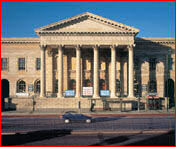
The Metropolitan Tabernacle in London is a thriving evangelistic congregation. Anyone who thinks Calvinism is hostile to evangelistic zeal ought to come here and see firsthand what evangelistic Calvinism looks like.

In fact, this church goes against all the wisdom of modern church-growth experts. It's an inner-city church doing a fine job of reaching its own local community with the gospel. The neighborhood is about as diverse as you can imagine, comprising people from more than a half dozen cultures—African, Russian, Asian, Sri Lankan, Indian, Eastern European, English, and more. The congregation, including the diaconate, reflect that heterogeneity. Yet, as far as the style of worship is concerned, there's no accommodation to cultural diversity. The services are pretty much like they were in Spurgeon's day. Nothing is deliberately contemporary or entertainment-oriented. There are no choruses. There are no video screens. There are none of the accoutrements of "contemporary worship." Although all the church-growth experts continually insist such things are absolutely necessary, the conventional wisdom is belied by the reality of what is happening here. The centerpiece in every worship service is the preaching of the Word. It's straightforward and plain. And yet every service I have ever attended at the Tabernacle has been full to capacity.

Plaque from where Spurgeon died
This plaque was brought from Mentone, France, when the hotel where Spurgeon died was demolished. It's part of the Tabernacle's superb memorabilia collection.

Probably the most significant change in worship "style" since Spurgeon's time is the addition of an organ. But even that is kept carefully in check. It's there to keep tune and tempo on track; you won't hear any embellishments or creative harmonizing from the organist (who is a fine musician nonetheless). Dr. Masters once told me he likes the fact that English hymnbooks usually include the words only, because it encourages people to sing in unison. (That's very different from what I have heard in Wales, where people sing with great gusto in beautiful harmony; or in Scotland, where every man sings what is right in his own eyes.)

And yet, the music at the Tabernacle is hearty and robust and strangely moving. I've been here more than a dozen times, and I would estimate that only about 15 percent of their hymn-tunes are familiar to me. But the tunes are easy to learn, and the hymns are rich in theology and vivid language. Consider this first stanza from a hymn we sang tonight:

Extended on a cursed tree,
Besmeared with dust, and sweat, and blood,
See there, the King of glory see!
Sinks and expires the Son of God.

We also sang "Rock of Ages" to a stately tune that I presume is the original one Augustus Toplady's own congregation would have used. It was much more solemn and dignified than the trite tune most American congregations use—or used in those days long ago when we still sang that great hymn.

Anyway, I love the hymns and the worship here. I realize that puts me in a small minority, but the vibrant congregation here at the Met Tab is a living and very definitive rebuttal to those who think contemporary "style," rather than the power of God's Word itself, is the essential key to church growth.

I spoke today in the morning service on "The Limits of Temptation" from 1 Corinthians 10:13. Tonight Dr. Peter Masters gave a wonderful evangelistic message on Luke 11:27-28. He made good use of his own testimony as an illustration of how unbelievers use various bogus means to defend and preserve their own unbelief in the face of every good reason to believe. I thoroughly enjoyed and was blessed by every aspect of the day.

She's got a tikka to ride

More on London food: My friend Duncan, who is a doctor here in London, informs me that recent surveys show the most popular food in England is not fish and chips, not bangers and mash, not bubble and squeak—but chicken tikka masala?!!

There's no accounting for British tastes. If they like spicy Indian food, why are their own traditional foods so devoid of taste? Or is London's love for ethnic fare merely a rebellion against the generations of blandness in their diet? Seriously, there are kebab shops, Mediterranean restaurants, and spicy ethnic foods of every imaginable kind on every street in London. Not much that is truly American, though. Even Burger King's burgers are assembled by Ethiopians, who seem to think more is better when it comes to condiments. Darlene had a Whopper with cheese that was so dripping with mayonnaise that it proved to be inedible.

And speaking of chicken tikka, one of my longtime favorite London fast foods is a chicken tikka sandwich on a baguette from The Upper Crust, a sandwich franchise you can find in every train station in town. The one I had tonight, however, was laden with about a half cup of mayonnaise and twice more chutney than chicken. It was awful—at least as bad as Darlene's burger. I can't wait till Starbucks opens for breakfast. Strong coffee and a muffin is just what I need.

Speaking of Starbucks, there seem to be almost as many Starbucks stores as drunken Canadians in London. Sometimes you'll see two Starbucks within a block of each other. I'm not sure what that's about, since Brits still prefer tea to coffee. I guess the ubiquitous coffee places cater mostly to tourists. But seeing all the Starbucks helps me understand why Europeans are so worried about American economic imperialism. I'd feel the same way if The Upper Crust moved into Santa Clarita on every corner.

But the Cornish Pasty shops are still welcome.

See you tomorrow. It's a study day for me.


02 July 2005

A London Journal—Day Two

Not your typical day in London

London bus

LONDON—I slept till 10:00 AM. I don't know how I accomplished that in spite of the early summer sunrise and traffic noise. But Darlene was quietly watching Wimbledon on the telly when I finally awoke. After I finally got ready to go out, she wanted lunch and I wanted breakfast, so we walked to Waterloo Station, where I went to Starbucks for coffee and a scone. She got a healthy lunch at McDonald's, and we sat together at a nearby table. I love her.

On the way home, I got a haircut at a randomly-chosen barber shop in the neighborhood. Risky, I know. But it looks pretty good.

There was a lot going on in London today: the Wimbledon women's singles final (Venus won), the massive Live 8 concert at Hyde Park (I was nowhere near the place), a one-day cricket match at Lords (the Pommies fought Australia to a rare draw), a televised rugby match from Wellington, NZ, that had people packing into the London pubs (the All Blacks had their way with the British and Irish Lions); and the Gay Pride parade from Hyde Park to Trafalgar Square. Oh, and did I mention the massive cleanup job left by last night's Canadia Day reveling?

My thoughts on "Live 8"

I hate to be a killjoy, but I find all the hype, hysteria, and hypocrisy of Live 8 nearly as revolting as the Gay Pride proceedings. Live 8 was broadcasting all day, so it was on the telly in the barbershop and everywhere else I went all day. Is there a silly rich blonde girl anywhere in London today who wasn't handed a microphone so she could emote for the audience about how "no one has done anything about poverty for 20 years, since the original Live Aid Concert"? I doubt it.

The BBC's coverage also featured a non-stop parade of worldly luminaries who have devoted their whole lives to shallowness—now suddenly smitten in conscience and determined in a single day to "Make Poverty History." Someone (I think it was Bob Geldof) convinced everyone that they could end poverty the same way Hal Roach's Little Rascals survived the Great Depression: "Hey! Why don't we put on a show?" The celebrities alternated as if on cue between giddy and grim.

Do sane people really think Western materialism, self-conceit, and celebrity-worship can be leveraged to solve the problem of African poverty? I agree with this guy.

The most disturbing picture of the day was when Snoop Dog took the stage and began spouting appalling profanities in rhythm to a rap beat. The camera cut away to an English dude (probably a banker) in a pin-stripe suit and tie, squinting as if deep in thought and nodding in time to the cadence—as if he really gets it.

Sorry. I know stuff like that tends to make most people get all teary-eyed and sentimental, but it has the opposite effect on me. John 12:3-8 seems appropriate in this context. There you see an artificial concern for the poor motivated by selfish pretext. It's a sin at least as old as Judas. And consider how arrogant the "Make Poverty History" slogan is, in light of Jesus' words in verse 8.

Anyway, to something only slightly less dour—

More about London food

Actually, the food situation in London is not as bleak as some travelers like to make out. I think the biggest problem is the high price. But that is true of everything in London. I know how Londoners could end poverty in Africa if they really took a mind to: turn all the restaurants in London over to African owners. The food would be better, I'm sure. And a couple weeks' profit could probably pay off several developing nations' debt.

But the scarcity of good food in London is exaggerated, frankly. If you know your way around, you don't have to resort to Pizza Hut to find edible dishes. (I swore off British Pizza Huts some 15 years ago, because the pizza didn't have an authentic Pizza Hut look and feel. I like sausage pizza, and sausage in the UK is—well, that's another story. Bangers. An acquired taste. Not bad for breakfast, once you get used to them. But they don't work on pizza, and never will. First time I asked for sausage pizza in England, the waitress said—and I am not making this up—"Ha! That's an interesting idea!) Anyway, the restaurant scene all over England has vastly improved over the past half decade. They still have a way to go, but there's no need for an American to feel like a total foreigner.

Tonight, for example, I took Darlene to Chiquito in Leicester Square. They offer a reasonable facsimile of Mexican food. The tortilla chips have a vaguely rye flavor, and in order to make the nachos substantial enough for a meal you have to buy a side cup of chili (look for "chilli beef" on the menu), but the jalapeños are authentic and the salsa is pretty decent, all things considered. I've been there before, and the chimichangas are passable, too. Darlene always has the cheeseburger. She gave me a bite tonight, and it was decent—not like the typical English cheeseburger, designed to be eaten with a fork and knife. (More about English manners in a minute.)

Then, as one of my commenters pointed out, there's always Chinatown, a block north of Leicester Square. I've eaten in three or four of those restaurants over the years. Every one I have tried was authentic and superb.

If you're in a train station and want fast food, skip the American chains like McDonald's and Burger King and go for the Cornish pasty shops. Really fine. I wish we could get decent Cornish pasties in Santa Clarita.

MinstrelsFor snack food, the Brits have invented something really wonderful: Galaxy Minstrels. They are like M&Ms, only four times as large. I'm not a huge fan of sweets and chocolates, but these are really, really good. (Note to self: Bring back two large bags for the bowl on Kim's desk.)

English manners

The difference between the English and the Americans can be summed up by a look at their respective road signs:

English
American


Plus, the English eat everything with a fork and knife. Not only cheeseburgers, but even chicken wings. Tonight at Chiquito, people at the tables on either side of us were trying to eat fajitas with a fork and knife!

Porta-looSo, since the English are known worldwide for such impeccable manners, can someone please explain to me why central London is now dotted with public, doorless urinals? I'm not talking about the Live 8 concert here; they have one of these things in the Strand, traditionally thought of as an upscale location, just across from the Hotel Savoy, and right in the main traffic pattern of one of the busiest sidewalks in central London. They have them at Leicester Square, too—always the busiest, most crowded spot in London when Live 8 is not in town. I confess I don't get it. I suppose it could be just a big joke for the tourists' sake. You never know with the British.

See you tomorrow.


01 July 2005

London Journal—Day One

London Journal

LONDON—Our hotel practically abuts Lambeth Palace, the London residence of the Archbishop of Canterbury. It's nearly midnight, and the Bishop has not yet stopped by or phoned to check on us.

We arrived from the airport at about 2:45. After unpacking and making sure I had Internet access in the room, I took a nap for an hour and a half. I realize travel experts will tell you a midday nap on arrival in a far-off time zone is a sure-fire way to exacerbate the problems of jet lag, but I do it every time I come. I have no choice; I couldn't possibly stay awake after the cramped and grueling overnight flight. I literally fell asleep in the taxi on the way from the airport. Why I can sleep in a London cab that jolts to a stop every thirty feet but I can't sleep decently in an airplane (no matter how smooth the flight) is a total mystery to me, too. But there you have it.

When I awoke, the computer was inexplicably off. The power cord had shut itself off, so the computer went into sleep mode. When I plugged the power cable in again, it wouldn't stay on. The green light would light and immediately go out. Although the cord is made to be compatible with the 220 current in the UK, I suspected something was overloading. So I unplugged everything, including my webcam, the cable for synchronizing my Palm computer, and the computer's power cable. The computer itself seemed to be working fine.

I plugged the power cable back in. The green light stayed on this time, but the whole room was soon filled with the smell of overheated electronics. By sniffing around, I isolated the source of the smell. It was coming from the back of my computer, where the little exhaust fans are. The fans have been extra noisy lately. Not any more. I shut the computer off, unplugged the power cord, said a prayer for the healing of my computer, and went to dinner with Darlene.

London is legendary for its lousy restaurants. If you want good food in London, the Asian restaurants are usually your best option. English food tends to be bland, stale, and meager. (Why did the British conquer the world in search of spices, of all things? What did they intend to use them for? Embalming?) There's a superb Indian restaurant just two doors away from our hotel. I love the place, but Darlene isn't fond of Indian food. That's OK. I also know a wonderful restaurant with (believe it or not) great English food.

PortersThe place is Porters, a full block west of Covent Garden. It's a across the Thames and about a mile and a quarter from our hotel, but we needed a long walk anyway. So we set out across the Westminster bridge around 6:30 PM. (The weather was threatening rain, and it sprinkled a few times but never really unleashed.)

On the way to Porters, we saw an unusual number of noisy drunken people wearing maple-leaf insignias and Canadian colors. Turns out today is some kind of Canadian holiday. (I'd been on an airplane for hours; didn't get to read Challies today, remember?) Anyway, I didn't know Canadians were permitted holidays, except for "boxing day," and an oddly-timed and barely-noticed Thanksgiving. But it seems some Canadians got really worked up about this back in 1868, and (envious of our July 4) they had July 1 declared a holiday. In 1982, it was given the name "Canadia Day." Who knew?

Canadian flagWell, a lot of people in London know about it tonight. There are so many revelling Canadians in central London right now—I wonder if anyone is left in Canadia. A block before we got to Porters, on the adjacent street (which has the misfortune of being home to a Canadian-themed pub), the entire area was jammed with Canadians drinking beer for at least a quarter mile. They stood, shoulder to shoulder, not doing anything except trying hard not to spill their beer. The only thing holding them up was each other. There were at least 10,000 of them. No lie. That's more Canadians than I have ever seen in one place, even when I went to an Expos game in Montreal a few years ago while the Expos were actually in a pennant race. Many of tonight's Canadians in London are carrying multiple six-packs. (Public consumption, sadly, is quite common here in London.) Its going to be a long night. I hope Challies will be able to post tomorrow.

Anyway, the food at Porters is as great as ever. Their fish & chips are the best I have ever had, with some really fine tartar sauce on the side. But my favorite side dish is mushy peas. It's a small bowl of well-cooked and mashed peas—about the consistency of refried beans, but with the flavor of a really rich split pea soup. You're not supposed to use it as a condiment for dipping fries, but it works superbly that way.

The desserts at Porters are legendary. Of course in England, all desserts are called "puddings" in that delightful British patois. Even cake is a "pudding." (Believe it or not, pig intestine is also called "pudding.") The specialty of the house at Porters is a famous English pudding called "Spotted Dick." If I were in the mood for a pudding—which I'm not—I think I'd go for the pig entrails.

Back at the hotel, the electrical smell was gone. I plugged the computer in, observed that the electrical cable was working; checked to see that the light signifying a charging battery was on; and noted that everything seemed normal. So I turned on the computer, and as you can see, it seems to be working fine.

Something in it is melted, however. I'm pretty sure of that. Maybe it has something to do with last Saturday's coffee fiasco. I don't have time to worry about it now. I'm going to bed. Bill Fickett: I'm going to get that new lap top ASAP when I get back home. You and Ted can start pricing units.

Update before my final edit: The computer turned itself off without warning a few minutes ago. I think I'm in trouble.


Emerging from the London fog

London

LONDON—I hate long flights. Anything over four hours can drive me up the wall. But one of the things I like to do on overseas flights is catch up on my reading.

Yesterday I packed a four-inch-thick stack of papers (mostly web documents that I had printed out over the past three months, thinking I would read them at the first opportunity). They all roughly fit in about four categories:
  1. Articles and reviews (both pro and con) about the New Perspective on Paul; Federal Vision/Auburn Avenue Theology; Norman Shepherd; and "Reformed Catholicism."
  2. Open letters and blogged replies both defending and critiquing the Emergent Church Movement. (Most of these were items occasioned by "Our Response to Critics of Emergent," from Tony Jones, Doug Pagitt, Spencer Burke, Brian McLaren, Dan Kimball, Andrew Jones, Chris Seay).
  3. Some really long and diverse blogposts from various souces on assorted topics (ranging from the whimsical to the deadly serious). They all looked interesting but were too long to read when I found them.
  4. A few academic papers on hyper-Calvinism.

On top of that, I had about a dozen recent magazines—mostly issues of World, dating back to late April. This was a thick stack of magazines I had not had time to read. I read them and left them on the plane, so my luggage is already 7-10 pounds lighter than when I left home.

That's how our ten-hour flight became a marathon reading session for me. It's a typical way for me to occupy myself on long flights, really. I can't usually sleep on planes, and on overseas flights, everyone else always does. So it's a great opportunity to read. But about seven hours into the flight, my brain is totally fried. There's no way I can possibly read through everything. That's OK. I'll read the rest on the way home.

Here are the three best items so far:

  1. "Emergent church proponents respond to their critics," by Ron Gleason at Challies Community Blog. This was sharp and witty, and the interaction in the comments was a hoot to read. Best quote: "By the way, if McLaren and the others didn't want to create new jargon, they've failed miserably because everyone from James McClendon to McLaren, to Miller uses virtually identical jargon. They are, in a word, 'jargonal.'" I loved this article and Gleason's writing style. This was my first encounter with Ron Gleason, but I'll be searching out more of his material. I see he also has an article about Emergent's pet foul-mouthed virago, Anne Lamott. I'll be reading that next.
  2. Al Mohler's two-part evaluation of D. A. Carson's critique of the Emerging Church. A good digest of the problems with pomoism. Favorite quote: "There is a thin-skinned sensitivity on the part of many of those who identify with the Emerging Church. Even as they level severe and unstinting criticism at the inherited evangelical models, they recoil from criticism directed at their own proposals." Precisely: "Let's have a conversation—only you don't get to talk at all unless you affirm me."
  3. Gary North's assault on T. David Gordon's infamous article, "The Insufficiency of Scripture." The Gordon article, published in the Jan/Feb 2002 issue of Modern Reformation, has discreetly been removed from the magazine's online archives. It was probably the low point (or perhaps second lowest) of that magazine's otherwise often distinguished record. North's analysis is, as you would expect, acerbic, entertaining, informative, and a perhaps a little paranoid. But hey, that's why we read Gary's stuff. This article reminded me what a keen mind Gary North has, and what a shame it is that he has been so obsessed over the years with doomsday scenarios and money-making techniques. The best quote of this particular article is too long to cite in full here, but here's a bit of it:
    The problem as [Gordon] sees it is this: the Bible is insufficient.

    I would suggest that part of the reason our unbelieving friends succeed as often in marriage as we do is that they are never hoodwinked by any misunderstanding of the self-sufficiency of Scripture. They are never counseled to "read two verses and call me in the morning."

    Is this clever, or what? Can he zing pastors, who spend much of their time in marital counselling, usually free of charge?

    My conclusion: It is a lot easier to give lectures at a humanist-accredited, PCUSA-run college than it is to give counsel to couples about to divorce.

    OK, let's get down to specifics. Let's go to the Bible. Here are my two verses. Dr. Gordon can call me in the morning.

By the way, here's a fourth item that I really enjoyed, and since I haven't indulged in BlogSpotting for several days, I'll shamelessly and vaingloriously point this out: At the end of the current issue of World, Marvin Olasky includes a special section: "Useful books for summertime reading." He gives a thumbs-up to Fool's Gold?—a book published recently by Crossway that several of us who are connected with The Shepherds' Fellowship collaborated on. It seems Mr. Olasky liked my assessment of N. T. Wright and the New Perspective on Paul a whole lot better than Li'l Brudder did.

Good stuff. Now I'm going to take a nap.