08 November 2005

Four reasons there was no regular blogpost today

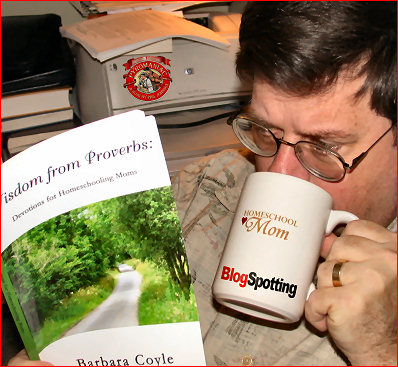
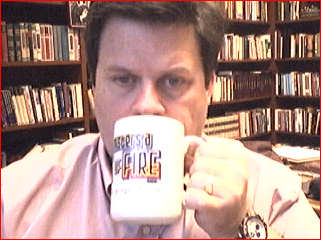
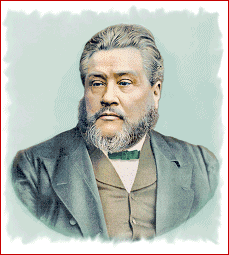
My new Profile picture. Whaddya think?
  1. My allergies have left me feeling worse than ever today. I awoke at 3:00 AM unable to breathe and hence unable to sleep. So I went to the office at 4:00 this morning and have been fatigued all day.
  2. I spent most of the day today glued to the telephone, participating by long distance in a board meeting located in Bradenton, Florida. I would have much preferred to be there in person, but I'm glad not to be on the road on a day when I feel so lousy.
  3. I broke down and bought an iPod yesterday. So in the background of everything else I'm doing today, I've started ripping my copious CD collection and uploading it to the iPod (mostly Classical disks).
         The iPod is wonderfully designed, with no moving parts, a minimum of buttons and cables, a totally intuitive system (the "user's manual" is a single folded sheet of paper with less info than the liner notes in a typical CD. The software works brilliantly. I'm going to love it. I already do.
         The best immediate benefit for me is the ability to subscribe to John Piper's podcast. "Desiring God Radio" wasn't on any radio outlet I could easily listen to (and I don't normally like to use my computer as a listening device, because if I'm using the computer at all, all I want is background music, and I don't want even that to slow down or get in the way of whatever I am doing). But with the iPod, I can get the feed for each day's broadcast automatically delivered when I plug it in the morning, and I can listen anytime at my leisure.
         Today's message from Piper is the middle lecture of a three-part series on Athanasius, the hero of the Arian conflict in the fourth century. Piper's observations are brilliant and priceless. He says it's not enough to profess love for the Person of Christ; we must fight for true propositions about Him as well. He demonstrates why extrabiblical language is sometimes vital in the defense of biblical truth. He shows a lot of parallels between the methodology Arius employed in peddling his heresy and the way people with questionable orthodoxy today are maneuvering to try to commandeer the mainstream of the evangelical movement. In all, it's one of the best historical studies I've ever heard Piper deliver. You can listen to the whole three-day series at Oneplace.com.
  4. I've taken more Benadryl. Several people advised me that Claritin-D would be effective without the drowsiness. I tried it. It did not cause drowsiness, but it also had no perceptible effect on the allergy symptoms
         If the Benadryl wears off tomorrow and I get home at a reasonable time, I'll pick up where we left off on the issue of modern prophecy. In the meantime, go easy on me. I don't have time, energy, or mental focus enough to answer antagonistic comments.

Phil's signature

07 November 2005

The Banner of Truth arrived in the mail today

I've always loved The Banner of Truth. The November issue is especially good. Just thumbing through, I noticed a brilliant article by Tom Lyon, "The Centrality of Preaching." Lyon includes an undocumented quotation from John MacArthur:

Worship services in many churches today are like a merry-go-round. You drop a token in the collection box; it's good for a ride. There's music and lots of motion up and down. The ride is carefully timed and seldom varies in length. Lots of good feelings are generated, and it is the one ride you can be sure will never be the least bit threatening or challenging. But though you spend the whole time feeling as if you're moving forward, you get off exactly where you got on.

I recognized the quotation as something I once edited, but I had to do a little searching to find it. Turns out it's from Our Sufficiency in Christ (Dallas: Word, 1991), pp. 150-51.

The "News & Comment" section of this issue includes something that made me smile. It's a scolding from "Lady Catherwood of Cambridge," who wrote to express her displeasure over a remark reported in a previous issue's account of the U.S. Ministers' conference. It seems someone had suggested that the use of PowerPoint presentations is a good way to build a congregation of women. ("Men and boys do not hear unless you are looking them in the eye....")

Precisely who originally made the remark isn't quite clear, but I figure it had to be some American. I'm just glad it wasn't me.

What's not mentioned is the fact (well known to regular Banner readers) that Lady Catherwood is Dr. Lloyd-Jones's daughter. She has also been the main editor of Lloyd-Jones's printed works for many years. I've served with her on the board of The Martyn Lloyd-Jones Recordings Trust for about twelve years and have the utmost respect and affection for her. Both her depth of theological understanding and her editorial accomplishments make her a particular hero of mine. Getting a scolding from her would cause me more pain that a twenty-minute clubbing from ten homeschool moms using unabridged dictionaries. But it was fun to watch, as long as someone else was on the receiving end of her reprimand.

Also in "News & Comment" is an editorial response to "a number of readers" who have written to express displeasure that there is so much controversy in Christendom. The editorial is a brief, patient, thoughtful, and well-worded defense of the need to defend sound doctrine. The Banner has always excelled at defending the truth with power and conviction but without rancor.

Phil's signature

Spurgeon on private prophecies and new revelation

Your weekly dose of Spurgeon

PyroManiac devotes Monday space to highlights from The Spurgeon Archive.

SpurgeonCharles Spurgeon was a cessationist. He regarded the charismata as apostolic signs—unique gifts for a unique era. He taught (as did virtually every evangelical preacher of his era) that the miraculous gifts described in Acts and 1 Corinthians (including the ability to command physical healing or speak in tongues) ceased before the end of the apostolic era.

Nonetheless, Spurgeon is sometimes cited by contemporary charismatics as someone who would be sympathetic with the idea of modern supernatural prophetic utterances, because he himself occasionally acted upon strong subjective impressions as if they were special revelatory messages from the Holy Spirit. Here are a couple of examples from his sermons:

"Looking for One Thing and Finding Another" (sermon 3075):

Many old stories are current which we do not doubt are true. There is one of a man who never would attend a place of worship until he was induced to go to hear the singing. He would listen to the tunes, he said, but he would have "none of your canting preaching," he would put his fingers in his ears. He takes that wicked precaution, and effectually blocks up Ear-gate for a while, but the gate is stormed by a little adversary, for a fly settles on his nose; he must brush it off, and, as he takes out his finger to do so, the preacher says, "He that hath ears to hear, let him hear." The man listens, the Word pierces his soul, and he is converted.
     I remember quite well, and the subject of the story is most probably present in this congregation, that a very singular conversion was wrought at New Park Street Chapel. A man, who had been accustomed to go to a gin-palace to fetch in gin for his Sunday evening's drinking, saw a crowd round the door of the chapel, he looked in, and forced his way to the top of the gallery stairs. Just then, I looked in the direction in which he stood,—I do not know why I did so, but I remarked that there might be a man in the gallery who had come in there with no very good motive, for even then he had a gin-bottle in his pocket. The singularity of the expression struck the man, and being startled because the preacher so exactly described him, he listened attentively to the warnings which followed; the Word reached his heart, the grace of God met with him, he became converted, and he is walking humbly in the fear of God.

"The Call of 'To-Day'" (sermon 3160):

An incident occurred this afternoon. An aged minister, an excellent man, came into my vestry, and shook my hand and said, "I have got this letter which I should like you to see."
     Well, I had many things to attend to, but he was so anxious and said, "I know you will like to hear it," that I took the letter.
     Before I read it he explained to me that he had a son who had made a profession of religion, but had gone aside from it, and it had pretty well broken his heart. At last, he was to go to America, and the father sent him away with a very heavy heart. The old man took off his spectacles.
     The letter was from his son and it said, "I went to hear Mr. Spurgeon, and I have not the slightest doubt that it has had an influence on my whole life. The text was, 'He is as a root out of a dry ground.' The sermon was divided into four parts."
     I can recollect the sermon well enough. I was suffering from great pain at the time.
     "The point which lasted longest was that in which he said that God had made Christ to grow up like a root, like a root out of a dry ground. He went on for twenty-five minutes,"—[then he gave an opinion of my style which I won't read to you]—"but what surprised me most was that out of five or six thousand, he fastened his eyes or me though I was in the farthest gallery"—[the young man's name was Thomas So-and-so—the son of the Baptist minister]—"and suddenly he shouted out these words, 'There's that wild, dare-devil Tom. God means to save him: and he will be a comfort to his father in his old age.'"
     The old gentleman took off his spectacles again when he got to that and said, "And so he is."
     It went on, "I thought he was going to say my name." He trembled lest the people should think his name was Tom.
     Well, that cheered my heart to think of that young fellow, and I thought I would have a shot at some of you to-night, and I pray that it may go right straight through your hearts.

On the other hand, whenever Spurgeon discussed such things, he nearly always warned of the dangers of such mysticism. Here are a few of his famous comments on the subject:

"Our Manifesto" (sermon 2185):
I hope that none of us will ever fall into the snare of following the guidance of impressions made upon us by texts which happen to come prominently before our minds. You have judgements, and you must not lay them aside to be guided by accidental impressions.

"A Well-Ordered Life" (sermon #878):

Some, I know, fall into a very vicious habit, which habit they excuse themselves—namely, that of ordering their footsteps according to impressions.
     Every now and then I meet with people whom I think to be rather weak in the head, who will journey from place to place and will perform follies by the gross under the belief that they are doing the will of God because some silly whim of their diseased brains is imagined to be an inspiration from above. There are occasionally impressions of the Holy Spirit which guide men where no other guidance could have answered the end. I do not doubt the old story of the Quaker who was disturbed at night and could not sleep and was led to go to a person's house miles away and knock at the door just at the time when the inhabitant was about to commit suicide—just in time to prevent the act.
     I have been the subject of such impressions, myself, and have seen very singular results. But to live by impressions is oftentimes to live the life of a fool and even to fall into downright rebellion against the revealed Word of God. Not your impressions, but that which is in this Bible must always guide you. "To the Law and to the Testimony." If it is not according to this Word, the impression comes not from God—it may proceed from Satan, or from your own distempered brain! Our prayer must be, "Order my steps in Your Word.
     Now, that rule of life, the written Word of God, we ought to study and obey. The text proves that the Psalmist desired to know what was in God's Word—he would be a reader and a searcher. O Christian, how can you know what God would have you to do if your Bible is unthumbed and covered over with dust? The prayer implies, too, that when David once knew God's Word, he wished to fulfill it all. Some are pickers and choosers. One of God's commands they will obey—another they are conveniently blind to—even directly disobedient to it. O that it were not so with God's people, that they had a balanced mind in their obedience and would take God's Word without making exceptions, following the Lamb where ever He goes!
     "Order my steps," Lord, not in a part of Your Word, but in all of it. Let me not omit any known duty, nor plunge into any known sin. There was, in David's mind, according to this prayer, a real love for holiness. He was not holy because he felt he ought to be and yet would gladly be otherwise. If there were anything good and lovely, he desired to have it. If there were anywhere in God's garden—a rare fruit or flower of purity and excellence—he longed to have it transplanted into his soul, that in all things his life might be the perfect transcript of the Word of God. Stick, then, to God's Word. There is a perfect rule in the Divine statutes. May the Holy Spirit cast us in the mold of His Word.

"Two Episodes in My Life," from "The Sword and the Trowel," October 1865:
SUPERSTITION is to religion what fiction is to history. Not content with the marvels of providence and grace which truly exist around us, fanaticism invents wonders and constructs for itself prodigies. Besides being wickedly mischievous, this fabrication is altogether unnecessary and superfluous, for as veritable history is often more romantic than romance, so certified divine interpositions are frequently far more extraordinary than those extravaganzas which claim fancy and frenzy as their parents. Every believing man into whose inner life we have been permitted to gaze without reserve, has made a revelation to us more or less partaking of the marvelous, but has generally done so under protest, as though we were to hold it for ever under the seal of secrecy. Had we not very distinctly been assured of their trustworthiness, we should have been visited with incredulity, or have suspected the sanity of our informants, and such unbelief would by no means have irritated them, for they themselves expected no one to believe in their remarkable experiences, and would not have unveiled their secret to us if they had not hoped against hope that our eye would view it from a sympathizing point of view. Our personal pathway has been so frequently directed contrary to our own design and beyond our own conception by singularly powerful impulses, and irresistibly suggestive providences, that it were wanton wickedness for us to deride the doctrine that God occasionally grants to his servants a special and perceptible manifestation of his will for their guidance, over and above the strengthening energies of the Holy Spirit, and the sacred teaching of the inspired Word. We are not likely to adopt the peculiarities of the Quakers, but in this respect we are heartily agreed with them.
     It needs a deliberate and judicious reflection to distinguish between the actual and apparent in professedly preternatural intimations, and if opposed to Scripture and common sense, we must neither believe in them nor obey them. The precious gift of reason is not to be ignored; we are not to be drifted hither and thither by every wayward impulse of a fickle mind, nor are we to be led into evil by suppositious impressions; these are misuses of a great truth, a murderous use of most useful edged tools. But notwithstanding all the folly of hair-brained rant, we believe that the unseen hand may be at times assuredly felt by gracious souls, and the mysterious power which guided the minds of the seers of old may, even to this day, sensibly overshadow reverent spirits. We would speak discreetly, but we dare say no less.

"The Holy Spirit in Connection with Our Ministry" from Lectures to My Students, Vol. 3:
I need scarcely warn any brother here against falling into the delusion that we may have the Spirit so as to become inspired. Yet the members of a certain litigious modern sect need to be warned against this folly. They hold that their meetings are under "the presidency of the Holy Spirit:" concerning which notion I can only say that I have been unable to discover in holy Scripture either the term or the idea. I do find in the New Testament a body of Corinthians eminently gifted, fond of speaking:, and given to party strifes—true representatives of those to whom I allude, but as Paul said of them, "I thank God I baptized none of you," so also do I thank the Lord that few of that school have ever been found in our midst.
     It would seem that their assemblies possess a peculiar gift of inspiration, not quite perhaps amounting to infallibility, but nearly approximating thereto. If you have mingled in their gatherings, I greatly question whether you have been more edified by the prelections produced under celestial presidency, than you have been by those of ordinary preachers of the Word, who only consider themselves to be under the influence of the Holy Spirit, as one spirit is under the influence of another spirit, or one mind under the influence of another mind.. We are not the passive communicators of infallibility, but the honest teachers of such things as we have learned, so far as we have been able to grasp them. As our minds are active, and have a personal existence while the mind of the Spirit is acting upon them, our infirmities are apparent as well as his wisdom; and while we reveal what he has made us to know, we are greatly abased by the fear that our own ignorance and error are in a measure manifested at the same time, because we have not been more perfectly subject to the divine power.
     I do not suspect that you will go astray in the direction I have hinted at: certainly the results of previous experiments are not likely to tempt; wise men to that folly.

"Enquiring of God" (sermon 2996)
Sometime, too, but rarely, God guides us by very vivid impressions. I have seen so much of people who have been impressed this way, and that way, and the other way, that I do not believe in impressions except in certain cases. I was once in conversation with two friends, one of whom was guided by his judgment, while the other was swayed by impressions, and I could not help noting that the man who was guided by impressions was, as such people always will be, "unstable as water." If I am impressed in one way one day, I may be impressed in another way the next day, so impressions are unreliable guides. There was a young man, who was impressed with the idea that he ought to preach for me one Lord's day; but as I was not impressed to let him do so, it stood over, and probably will continue to stand over for some little time. He had no gifts of speech, but he thought his impression was quite sufficient. When I receive a similar impression, the revelation will be a proper one, and you will have the pleasure of listening to his voice, but certainly not before that.
     Occasionally, impressions do guide a man right. A Quaker, one night, could not sleep; and he had a very strong impression that he must get up and saddle and mount his horse. He did so, and rode along the streets, his horse's hoofs noisily clattering in the silence of the night. He did not know where he was to go, but there was a light in one house, and something seemed to say to him, "This is the house to which you are to go." He dismounted, and knocked at the door, and a man came down, and asked why he was there at that time of night. "Perhaps, friend," answered the Quaker, "thou canst tell me, for I do not know, but I have been moved to come here." "I can tell you indeed," said the man, with much emotion; and he took him upstairs, and showed him a short halter with which he was about to hang himself when the Quaker came to his door. Such strong impressions are not to be despised, and I have no doubt that highly spiritual minds do become like the photographer's sensitive plate, and do receive impressions. What another man may be a fool for talking of, such men may truly speak of, for God does sometimes reveal his will in that way.

Intelligent Obedience (sermon 3263)
Others, too, judge of their duty by impressions. "If I feel it impressed upon my mind," says one, "I shall do, it." Does God command you to do it? This is the proper question. If he does, you should make haste, whether it is impressed upon your mind or not; but if there be no command to that effect, or rather, if it diverges from the line of God's statutes, and needs apology or explanation, hold your hand, for though you have ten thousand impressions, yet must you never dare to go by them. It is a dangerous thing for us to make the whims of our brain instead of the clear precepts of God, the guide of our moral actions. " To the law and to the testimony,"—this is the lamp that shows the Christian true light; be this your chart, be this your compass; but as to impressions, and whims, and fancies, and I know not what beside which some have taken,—these are more wreckers lights that will entice you on the rocks. Hold fast to the Word of God, and nothing else; whoever he shall be that shall guide you otherwise, close your ears to him. If at any time, through infirmity or weakness, I should teach you anything which is contrary to this Book, cast it from you, hurl it away as chaff is driven from the wheat; if it be mine and not my Master's, cast it away. Though you love me, though I may have been the means of your conversion to God, think no more of what I say than of the very strangers in the street, if it be not consistent with the teachings of the Most High. Our guide is his written Word, let us keep to this.

Phil's signature

06 November 2005

Some odds 'n' ends before I lapse into a drug-induced stupor

For reasons that I don't understand, I am beset with severe allergy problems every year about this time. I know it's not technically "hay fever" season for most folks. But oddly enough, for most of the 23 years I have lived in California, I start having itchy eyes, congestion, asthma, and other allergic symptoms around November 1, and it can last until mid-April, just when most people start fighting allergies.

I'm sure it has something to do with olive trees budding and blooming, because whenever I am in the vicinity of them, it's noticeably worse. I feel the effects of my allergies ten times more in the San Fernando Valley (where Grace Church is) than I do here in the Santa Clarita Valley (where I live and work).

Anyway, this year my very own personal allergy season has been especially bad already, and that is not a good sign. Last week's trip to Mt. Hermon did not help; on the contrary, it made my eyes dryer, my nose itchier, and my sinuses more congested than before. There was an olive tree in the backyard of the place we stayed.

Today Darlene had to attend a meeting after church (dealing with the nursery volunteer staffing system), so I had to stay in the San Fernando Valley a couple of hours extra after church, and I felt so miserable when I got home that I had no choice but to take two Benadryl. That means I'll be lethargic and unfocused for the next 3 days.

Have I ever mentioned that I don't do well with drugs? Especially allergy tablets (which make me want to sleep); sleep aids (which usually keep me from sleeping at all); and pain killers (which tend to irritate my stomach and esophagus). If I mixed all three, they would basically cancel each other's side-effects but leave me either hyperactive or totally unconscious. I prefer the allergy symptoms, and when that gets to be too much, I choose the lethargy I get from Benadryl.

Anyway, I've got a few little things I want to blog about, but no one thing significant enough to devote a whole Sunday afternoon post to. So quick, before the Benadryl kicks in and leaves me unable to do anything productive but watch reruns of "The Rockford Files," I'm going to try to make a list:

  1. Despite all the militant language flying around the blogosphere suggesting you're about to witness a bloody cage match over the issue of cessationism, I personally don't expect anything rancorous.
         In the first place, cessationism was not even an issue I planned to raise in my current series of posts on false prophecy. I'm still hoping to finish what I originally intended to say before seriously taking up the cudgels against the non-cessationists. In the second place, I recognize this issue is an extremely difficult one in the minds of many people (including some dear friends of mine). So I intend to be uncharacteristically patient.
         While I'm at it, let me say that if all charismatics were of the Mahaney/Piper/Grudem variety, I probably wouldn't pick a fight over our differences on the charismata. That's not to say I approve of any kind of charismatic mysticism, but if no one ever went any further than, say, the typical guy from Sovereign Grace Ministries, I don't think I would spend much energy arguing against them.
         I grew up in Tulsa, however, and the true roots of the charismatic movement are there, not in Geneva. Despite what they want you to think, "Reformed" charismatics are a fairly new kind of hybrid, and they do not represent the mainstream of either the Reformed or charismatic movements. I like their zeal. I appreciate (and share) their desire for passionate (rather than cold and dry) orthodoxy. There's a lot about them I esteem highly, and I am certainly not merely looking for another group of people to make angry.
         But in the context of what is going on today, there are so many dangers associated with "new revelation" that it's not an issue I'm willing to ignore. And if cessationism is the main issue in the minds of people who are undecided about whether or not to listen to voices in their heads, I'm willing to argue the point. But not in an acrimonious way, and not until I've finished what I was going to say. So if you're looking for me to verbally bust some charismatic heads this week, you may be bitterly disappointed.
  2. If you just can't wait to get into the cessationism issue, at least three guys have already posted some pretty decent stuff. One is Daniel J. Phillips ("'Cessationism': ragged dress for a rich lady"); a second is Dave Ulrick, "The Inscrutable Observer" ("Two tiers of inspiration?"); and the third one is William Dicks ("Hearing God and Moving in the Prophetic: A critique").
  3. If you're looking for something like my old "Monday Menagerie" posts, Andrew Lindsey, newlywed, has something I think you will like.
  4. Here's a guy I seem to have a few things in common with.
  5. Here's I guy I seem to have almost nothing in common with.
  6. The Benadryl is having the expected effect. Look for Monday's regular Spurgeon post around midday Pacific time tomorrow.

Phil's signature

05 November 2005

Now back by popular demand: BlogSpotting

Whoa. I just noticed that my last BlogSpotting post was back in September. Forgive me for neglecting this important duty. The humor quotient here at PyroManiac is suffering, I fear. I'm sure I've also squandered more opportunities than I want to think about to pay tribute to the homeschool moms. Perhaps this will help make up for it:

Homeschool moms
(Mug design by Carla Rolfe)

Now, down to the bidness at hand:


That's about all I have time to write. I'm sure I missed a lot of links. But I'm not ignoring anyone on purpose. If the opportunity arises, I'll try to do another blogspotting post next week. (I was originally scheduled to fly to Tampa for some meetings on Tuesday and Wednesday next week, but I had to cancel the trip because Pecadillo was accepted into the LAPD's police academy, and Wednesday is his induction/orientation day. Darlene and I are invited to the festivities, so we're staying in town.) Maybe I'll have time to do some more BlogSpotting. Other than Pecadillo's copification, my calendar is pretty clear next week.

Phil's signature

04 November 2005

Rubber prophecies

First off, thanks to everyone who left a comment on yesterday's post. I spent the day yesterday dealing with members of my family who are ill, running a chauffeuring service to the local medical clinic and cooking soup. Everyone in the fam seems to be improving, but I had no time Thursday for answering blog comments.

Before we finish with the subject of modern prophecy, I do plan to deal with the question of Spurgeon's opinion on private revelation. (This is one of only three or four issues on which I would dare to disagree at all with the Prince of Preachers, and it turns out to be a fairly minor disagreement.)

I'll also recount how Jonathan Edwards and George Whitefield disagreed on the question of private messages from God—and how Cotton Mather's faith was nearly shaken when he believed God had guaranteed him specific answers to certain prayers, but then those answers never materialized. I also intend to comment on Henry Blackaby's paradigm for being "led" by the Spirit in Experiencing God. If interest in this subject is sustained long enough, I may also point out some examples of how subjective impressions "from God" are the basis for some of Bill Gothard's most questionable teachings.

But everything in its time.

PyroManiac

Today I want to pick up on something I said yesterday: I remarked on how commonplace and how easy it is for modern prophets to reinterpret, twist, and radically reshape their own prophecies in their blind desperation to manufacture "fulfillments" for bogus forecasts.

Want a specific case in point?

One of the best-known and most notorious examples of this began in the late 1970s, when Oral Roberts claimed he saw an enormous vision of Jesus, 900 feet tall. Roberts said the colossal apparition ordered him to build a hospital—a 60-story structure in south Tulsa. It was to be called "The City of Faith."

Roberts built the building, but no more than three floors of the skyscraper were ever used as a hospital. More than a decade after the original vision of the 900-foot Jesus, 80 percent of that immense building was still vacant and had never had any tenants.

The promised cure for cancer never materialized, either.

By January of 1987 the City of Faith was burdened with so much debt that Oral Roberts announced to the world that the Lord had visited him again. This time, he said the Lord told him that unless Oral raised eight million dollars to pay off the debt within two months, the televangelist would die. The great Oral Roberts Death Watch of 1987 became one of the biggest religious news stories of the year.

In the final hour before the deadline, a dog-track owner in Florida gave Oral Roberts a check for the money he needed. (I suppose at least part of the complex prophecy was therefore "fulfilled" when Oral Roberts survived.)

But to this day, Oral Roberts insists that all his predictions about "The City of Faith" were legitimate prophecies. Genuine messages from God. In 1989, Roberts explained to Charisma magazine that despite appearances, the City-of-Faith fiasco completely accomplished everything God really intended all along. Roberts said God had finally given him a new message that explained the whole thing:

God said in my spirit, "I had you build the City of Faith large enough to capture the imagination of the entire world . . . . I did not want this revelation localized in Tulsa, however. . . . "

As clearly in my spirit as I've ever heard Him, the Lord gave me an impression. "You and your partners have merged prayer and medicine for the entire world, for the church world and for all generations," He said. "It is done."

I then asked, "Is that why after eight years you're having us close the hospital and after 11 years the medical school?"

God said, "Yes, the mission has been accomplished in the same way that after the three years of public ministry My Son said on the cross, 'Father, it is finished.'" ["Oral Roberts: Victory Out of Defeat," Charisma (Dec. 1989), p. 88.]


So in the mind of Oral Roberts, his massive failed prophecy, which was played out across the front pages of the secular press, was no embarrassment at all. In Roberts's imagination, his white-elephant monument to modern false prophecy is comparable to the finished work of Christ.

If you can twist your interpretation of the divine plan after the fact like that, there is no reason ever to regard any prophecy as false.

I could give a long list of similarly famous failed prophecies. Benny Hinn made a whole string of them in 1989. As he looked forward to the nineties, Hinn claimed God had shown him several important events that would surely come to pass within the decade. Fidel Castro would die sometime in the 1990s, Hinn prophesied. He also said the homosexual community in America would be destroyed by fire before 1995. A major earthquake was supposed to cause havoc on the east coast before the year 2000.

None of those things happened, of course. But it has not stopped Hinn from making more fantastic prophecies. In 2000 he predicted that Jesus would appear visibly, in person, at one of Benny Hinn's own healing crusades. It hasn't happened yet, but thousands of Hinn's followers are convinced that it will. And the expectation has boosted attendance at all of Benny's meetings.

An almost invincible gullibility has infected the modern charismatic and evangelical movements, creating an environment in which virtually anyone can make any bizarre prophecy he wants. If it turns out to be wrong, people will either forget or reinterpret the prophecy. And if the prophet happens to get one prediction right or even partially right, people will eagerly publicize that one correct guess as irrefutable proof that the prophet is inspired by God.

That type of "prophecy" is in no sense a "gift" from God. It is superstitious charlatanism, no better than the palm-reader in the ramshackle house with neon lights who bilks people out of their life savings by pretending to see the future.

Note: I am not now making any argument about cessationism vs. the continuation of miraculous gifts.

Whether you are a cessationist or not, you ought to be able to see that fatuous predictions which never come true are false prophecies, not legitimate spiritual gifts. And false prophecies are irrefutable proof that the mouthpiece who utters them does not really speak for God. If the contemporary church—including both charismatic and cessationist believers—cannot come to grips with that fundamental reality, then the only spiritual gift anyone ought to be seeking is the gift of discernment.

Frankly, we have an overabundance of professing prophets and tongues-speakers these days, and precious few men with real discernment.


Phil's signature


03 November 2005

Invasion of the evangelical soothsayers

This is the start of a brief new series on the current obsession with "fresh revelation" from God. Predictably, a lot of the same people who have decided that Scripture isn't "relevant" have developed an itching after new and different revelation. From the evangelical mainstream to the wildest charismatic fringe, multitudes are convinced God regularly speaks to them directly. Unfortunately, a lot of what's being "heard" is just hooey. This sort of artless divination has done more than anything else—including "drunkenness in the Spirit"—to propagate lunacy and confusion in the visible church. It is also a serious attack on the authority and sufficiency of Scripture.


I can attest to you on the basis of almost 30 years of experience in Christian publishing that there are a lot of very strange people out there writing an awful lot of books that ought never to have been written.

Of course, the ones who are inevitably the most impervious to critique or correction are the people who claim that what they have written was given to them directly by God.

A few years ago, when I worked as an acquisitions editor for a very conservative evangelical publishing company, I received a manuscript in the mail with a cover letter that said this:

It may surprise you to learn that I am just 22. My work, however, speaks for itself. These truths, indeed these revelations, were given to me by God and they need to be published for the whole world. By the way, I am familiar with your policy of no cash advances. Do you have a "no exceptions" policy as well?

A few days later, before I had time to reply, I received a second letter from the same author:

Stop the presses. My book must not be published in its present form. The material that does not edify must come out, and new material must replace it.

He explained why he was issuing this emergency recall:

My former pastor, Sister B. R. Hicks, in direct disobedience to God, lavished the prophetic gift meant for me on another whom she favored. She has not repented, she will not answer my mail, and she may not even acknowledge that my words are legitimate prophecy. I greatly fear for her and the church which she pastors.

Apparently this fellow's falling out with his pastor involved some moral failure on his part, because he wrote,

Sister Hicks may tell you that I fell from grace, but the heartbreaking truth is that I was pushed. She repeatedly turned me away from my calling.

As a result, all that God has given me in the way of prophecy has come to me in my separated, somewhat backslidden state. But I have been praying, fasting, and studying, and now I have a better understanding of God's message. So help me if you will, and return my manuscript for revision.

You can tell from the way that fellow wrote that he wasn't a drooling idiot. He was inventive, somewhat literate, unusually articulate, and very clever. He was totally serious when he claimed to believe that his writing was inspired by God. Oddly enough, however, his unshakable belief that God had inspired him did not keep him from wanting to make revisions to the text.

That tendency is the very thing that has always puzzled me the most about people who believe God is giving them private revelation. The messages they receive always seem very pliable. The meaning of the message often changes with the circumstances. There is no legitimate hermeneutical approach for interpreting such messages from God. And the meaning of any given message from God is often treated like a clay figure. You can bend it and shape it into any form that pleases you.

That sort of "prophecy" is no better than the deliberately vague and trivial horoscope messages printed every day in the local newspaper. In fact, it's worse, because it claims to be revelation from God, leaving the impression that He speaks indistinctly and unreliably.

"We have . . . a more sure word of prophecy; whereunto ye do well that ye take heed, as unto a light that shineth in a dark place" (2 Peter 1:19).

Phil's signature

02 November 2005

Why not follow the simple strategy God gave us?

We've been talking about the biblical strategy for spiritual warfare for several days now. This is the final post I plan to make on the subject for awhile. Tomorrow, Lord willing, we'll move on to a different topic. But as we wrap up, I want to spell out the main point that I hope you have seen in the subtext all along:

Have you noticed how radically different the Bible's war plan is from the conventional wisdom of contemporary evangelicalism?

Nowadays we see book after book being published on ministry philosophy, church-growth strategy, and Christian leadership—virtually all urging church leaders to compromise, conform, accommodate, adapt, and adopt the language and thinking of the world. Youth Specialties and Zondervan (under Rupert Murdock's shrewd leadership) have built a major industry publishing how-to books that teach young pastors and youth leaders how to suit their style to the latest worldly trends.

I am frankly weary of all the self-styled experts who are telling pastors and church leaders today that unless they get with the times, tone down their message, adapt their methods to meet the worldly preferences of the current generation, accommodate their message to the postmodern dialectic, bone up on this or that academic fad, or otherwise adopt some fleshly strategy, the church will die or lose the battle for the souls of the next generation.

We've tried all those strategies for at least three or four generations now, and we're still losing ground. In our mad pursuit of "relevance," has anyone noticed that the church is becoming more and more irrelevant? All this accommodation to the culture is the very thing that makes the church culturally irrelevant.

We are supposed to be in this world but not of it, remember?

Now, before any one accuses me of advocating cultural defeatism, retreatism, asceticism, monasticism, or pessimism, let me say that the truth lies in the opposite direction.

I'm not saying we should give up on reaching the world or be passive and silent. On the contrary, I think we should turn up the volume. But I'm also saying this: Don't distrust the weapons Christ has entrusted to His church. Don't underestimate the power of the plain word of God or the influence of clear and dynamic preaching. Don't set aside the weapons God has chosen and trade them for Saul's armor.

Only the word of God is "quick, and powerful, and sharper than any twoedged sword, piercing even to the dividing asunder of soul and spirit, and of the joints and marrow, and is a discerner of the thoughts and intents of the heart."

And if you're going to wage war in the spiritual realm, against evil imaginations and false ideologies, you are going to need a weapon like that—"a discerner of the thoughts and intents of the heart" that cuts with precision and pierces to the depths of the heart—not a toy weapon from the fleshly arsenal favored by contemporary worldly evangelicalism.

Phil's signature

01 November 2005

More about the weaponry of spiritual warfare

Before we move to a completely different topic, look again at what Paul says about the weaponry for spiritual warfare:

"For the weapons of our warfare are not carnal, but mighty through God to the pulling down of strong holds" (2 Corinthians 10:4).

What are "carnal weapons"? Is Paul thinking of swords and knives and other military weapons? Certainly he would include those things among the carnal weapons he rejects. But it's more than that. "Carnal weapons" would include carnal wisdom, human philosophy, worldly gimmickery, psychological manipulation, political clout, doctrinal compromise, and every other method or strategy adopted for sheerly pragmatic reasons.

Listen to Paul himself from 1 Corinthians 2:1-5 "And I, brethren, when I came to you, came not with excellency of speech or of wisdom, declaring unto you the testimony of God. . . . my speech and my preaching [were] not with enticing words of man's wisdom, but in demonstration of the Spirit and of power: That your faith should not stand in the wisdom of men, but in the power of God."

He's saying essentially the same thing here. "The weapons of our warfare are not carnal"; that is, they are not of human origin at all. They are not manmade military machines; they are not ideas spawned in the minds of human philosophers; they are not clever programs invented by imaginative innovators; they are not the techniques of material success borrowed from secular business.

And (can I say this without stirring Jus Divinum from hibernation?) the weapons by which the truth of God will ultimately prevail in this battle are not tied to the political apparatus of American democracy. The future of the kingdom of God doesn't ultimately hinge on the outcome of the next election or judicial appointment.

What are the true weapons in the spiritual warfare? At least one well-known charismatic commentator suggests that Paul was speaking of the apostolic sign-gifts—miraculous gifts of healing, prophecies, and various signs and wonders.

But that seems quite out of context here. Paul was not going to battle false apostles by staging a contest to see who could do the best miracles; he was going to answer their false teaching with the truth.

As I mentioned in an earlier post, I think the weapons Paul has in mind here are the stuff of truth itself—the very kind of weaponry he had already outlined in chapter 6, verses 6-7, where he says we wage this warfare "by pureness, by knowledge, by longsuffering, by kindness, by the Holy Ghost, by love unfeigned, by the word of truth, by the power of God, by the armour of righteousness on the right hand and on the left."

I have no doubt that Paul is also thinking of the full panoply of Christian weaponry, just as he outlines it in Ephesians 6:13-18. That passage includes a complete array of defensive armor and one simple offensive weapon. All of them are inextricably linked to the concept of truth. Here is the whole armor of God: the belt of truth, the breastplate of righteousness, feet shod with the gospel of peace, the shield of faith, the helmet of salvation, "and the sword of the Spirit, which is the word of God."

Notice: there is nothing novel or innovative about those weapons. They are old weapons. If you're waging a military fight (a warfare against literal flesh and blood), it is important to have the most modern, up-to-date weapons. Technology and innovation have always been important in conventional warfare. You don't want to show up at a gunfight with a knife. You can't go up against a modern army with nothing but slings and arrows.

But things are different in the spiritual realm. Our weapons are not carnal. We don't have any earthly military firepower. It may even seem to the carnal eye as if we are unarmed. But, Paul says, our weapons are "mighty through God to the pulling down of strong holds."

These weapons are powerful because they are the instruments of God's power. They are "mighty through God." Their effectiveness does not ultimately depend on the skill of the swordsmen or the cleverness of our strategies. These weapons are always effectual because they unleash the power of God.

Don't distrust those weapons. They trump every kind of fleshly weapon for spiritual warfare.

Phil's signature

31 October 2005

Spurgeon on warfare, compromise, and the sword of the Spirit

Your weekly dose of Spurgeon

PyroManiac devotes Monday space to highlights from The Spurgeon Archive.

SpurgeonHere's an excerpt one of the last sermons Spurgeon ever preached at the Metropolitan Tabernacle. This was preached on April 19, 1891—less than a year before Spurgeon's death. Spurgeon was embroiled in a great theological conflict at the time. It was the height of the "Down-Grade Controversy."

The sermon's theme is spiritual warfare. That, of course, has also been the central motif here at PyroManiac for several days. In this introduction to his sermon, Spurgeon makes some excellent points about the Christian's weaponry, the futility of compromise, and the need to stand.

Lord willing, we'll follow up some of these thoughts in Tuesday's post. In the meantime, if you want to read more of Spurgeon's sermon, the text is Ephesians 6:17 ("take . . . the sword of the Spirit, which is the word of God"); the title is "The Sword of the Spirit," and you'll find the complete sermon at The Spurgeon Archive.

TO BE A CHRISTIAN is to be a warrior. The good soldier of Jesus Christ must not expect to find ease in this world: it is a battle-field. Neither must he reckon upon the friendship of the world; for that would be enmity against God. His occupation is war. As he puts on piece by piece of the panoply provided for him, he may wisely say to himself, "This warns me of danger; this prepares me for warfare; this prophesies opposition."

Difficulties meet us even in standing our ground; for the apostle, two or three times, bids us—"Stand." In the rush of the fight, men are apt to be carried off their legs. If they can keep their footing, they will be victorious; but if they are borne down by the rush of their adversaries, everything is lost.

You are to put on the heavenly armor in order that you may stand; and you will need it to maintain the position in which your Captain has placed you. If even to stand requires all this care, judge ye what the warfare must be!

The apostle also speaks of withstanding as well as standing. We are not merely to defend, but also to assail. It is not enough that you are not conquered; you have to conquer: and hence we find, that we are to take, not only a helmet to protect the head, but also a sword, with which to annoy the foe.

Ours, therefore, is a stern conflict, standing and withstanding; and we shall want all the armor from the divine magazine, all the strength from the mighty God of Jacob.

It is clear from our text that our defense and our conquest must be obtained by sheer fighting. Many try compromise; but if you are a true Christian, you can never do this business well. The language of deceit fits not a holy tongue. The adversary is the father of lies, and those that are with him understand the art of equivocation; but saints abhor it.

If we discuss terms of peace, and attempt to gain something by policy, we have entered upon a course from which we shall return in disgrace. We have no order from our Captain to patch up a truce, and get as good terms as we can. We are not sent out to offer concessions.

It is said that if we yield a little, perhaps the world will yield a little also, and good may come of it. If we are not too strict and narrow, perhaps sin will kindly consent to be more decent. Our association with it will prevent its being so barefaced and atrocious. If we are not narrow-minded, our broad doctrine will go down with the world, and those on the other side will not be so greedy of error as they now are.

No such thing. Assuredly this is not the order which our Captain has issued. When peace is to be made, he will make it himself, or he will tell us how to behave to that end; but at present our orders are very different.

Neither may we hope to gain by being neutral, or granting an occasional truce. We are not to cease from conflict, and try to be as agreeable as we can with our Lord's foes, frequenting their assemblies, and tasting their dainties. No such orders are written here. You are to grasp your weapon, and go forth to fight.

Neither may you so much as dream of winning the battle by accident. No man was ever holy by a happy chance. Infinite damage may be done by carelessness; but no man ever won life's battle by it. To let things go on as they please, is to let them bear us down to hell. We have no orders to be quiet, and take matters easily. No; we are to pray always, and watch constantly.

The one note that rings out from the text is this:—TAKE THE SWORD! TAKE THE SWORD! No longer is it, talk and debate! No longer is it, parley and compromise! The word of thunder is—Take the sword. The Captain's voice is clear as a trumpet—Take the sword! No Christian man here will have been obedient to our text unless with clear, sharp, and decisive firmness, courage, and resolve, he takes the sword. We must go to heaven sword in hand, all the way. "TAKE THE SWORD." On this command I would enlarge. May the Holy Spirit help me!

It is noteworthy that there is only one weapon of offense provided, although there are several pieces of armor. The Roman soldier usually carried a spear as well as a sword. We have seen frequent representations of the legionary standing upon guard as sentry, and he almost always stands with a spear in his right hand, while his sword hangs at his side. But Paul, for excellent reasons, concentrates our offensive weapon in one, because it answers for all. We are to use the sword, and that only.

Therefore, if you are going to this fight, see well to your only weapon. If you are to have no other, take care that you have this always in your hand.

C. H. Spurgeon

Phil's signature

30 October 2005

An abbreviated account of Calvinism

Last week I was asked to give a group of college students a 50-minute survey of the history of Calvinist opinion. Sound like I bit off more than I could chew? That's what I think, too. But if you want to listen to "The story of Calvinism," it's downloadable for free.

Phil's signature

29 October 2005

So I took Friday off and came up to Santa Cruz with Darlene to visit some of our best friends...

Capitola, CA
Capitola, CA

The region around Santa Cruz and Capitola is practically our favorite place in the whole world. If a one-room bungalow didn't cost $750,000, we'd think of retiring here someday.

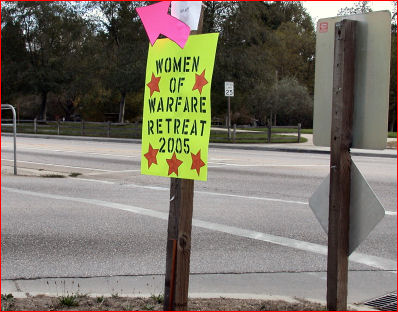
Nearby is the famous Mt. Hermon Christian conference center and campground—one of the premier Christian campgrounds anywhere (if not the absolute finest in the world). Down the road from the entrance to Mt. Hermon, we saw this sign:

Retreat?

I think it's a convention of homeschool moms.

Phil's signature

28 October 2005

Now, let's get personal

Centurion's Mugless Mug

I have been trying to underscore some principles about spiritual warfare from 2 Corinthians 10:4-5. If you get nothing else from that passage, please understand this much: First, the spiritual warfare we fight as Christian soldiers is a battle for truth, not territory.

Second, our weapons are not the carnal apparatus of worldly warfare, but vastly more powerful spiritual weaponry. Specifically, we wage this spiritual battle "by purity, by knowledge, by longsuffering, by kindness, by the Holy Spirit, by sincere love, by the word of truth, by the power of God, by the armor of righteousness on the right hand and on the left" (2 Corinthians 6:6-7).

Today I want to consider those principles from a very personal and practical perspective.

Have you ever realized that if spiritual warfare is ideological, the most crucial battle you will ever participate in takes place in your own heart? If the goal and the end game of this warfare is to bring "every thought [captive] to the obedience of Christ," that presupposes that my own first order of business must be victory in my own thought life.

I have no control over your thoughts. I can perhaps influence your thinking by proclaiming the truth of God's Word, but my role in that capacity is instrumental only. You can't really be accountable to me for your private thoughts, nor can I be similarly accountable to you. This is a battle you must fight, sometimes all alone. It's lonely, grueling, lengthy, frustrating—and it's the one great battle you can least afford to shirk.

Paul knew that. On occasion, he described the Christian warfare in precisely those terms:

  • Romans 7:22-23: "I delight in the law of God after the inward man: But I see another law in my members, warring against the law of my mind, and bringing me into captivity to the law of sin which is in my members."
  • Galatians 5:17: "The flesh lusteth against the Spirit, and the Spirit against the flesh: and these are contrary the one to the other: so that ye cannot do the things that ye would."

Paul was describing a struggle in his own heart. He says you can expect to have the same kind of internal conflict. That conflict you feel inside yourself is one of the key skirmishes you must win in the spiritual arena.

Peter understood that aspect of the warfare, too. In 1 Peter 2:11, he wrote, "Dearly beloved, I beseech you as strangers and pilgrims, abstain from fleshly lusts, which war against the soul."

That is why the New Testament uses such graphic and violent language when it speaks of our duty in the matter of sanctification.

  • Romans 8:13: "For if ye live after the flesh, ye shall die: but if ye through the Spirit do mortify [put to death] the deeds of the body, ye shall live."
  • Colossians 3:5: "Mortify . . . your members which are upon the earth; fornication, uncleanness, inordinate affection, evil concupiscence, and covetousness, which is idolatry."

One of the sad realities of warfare is that the soldier must kill or be killed. In the spiritual warfare, there is some killing for us to do, Paul says. It's not about killing people, for that would require carnal weapons. But it's about putting to death sin—first of all in our own members.

May I say as gently as possible that you that you cannot be a good soldier unless you take this warfare seriously? You must be spiritually earnest, sober-minded, sound in the faith, strong in the Word of God, and diligent in the battle.

Too many Christians, especially in this worldly age, are content to coast through life taking nothing seriously. If you read the blog regularly, you know I'm not arguing against every expression of a lively sense of humor. But I am saying that this warfare we are engaged in is serious stuff. It's not for the lazy or apathetic. In fact, if you are passive or careless at all in your own personal spiritual walk, you will suffer agonizing defeat at the hands of the enemy.

Phil's signature

27 October 2005

Picking up where we left off Tuesday...

Two days ago, before we got interrupted by the atonement debate, we were talking about spiritual warfare and 2 Corinthians 10:4-5:

"For the weapons of our warfare are not carnal but mighty in God for pulling down strongholds, casting down arguments and every high thing that exalts itself against the knowledge of God, bringing every thought into captivity to the obedience of Christ."

Those words evoked vivid imagery in the minds of the Corinthian believers.

Acrocorinthus
Acrocorinthus
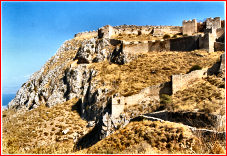
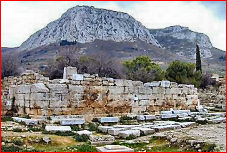
Just outside Corinth is a very high natural formation that overlooks that city. It is a tower of rock that stands over 1800 feet high, known as Acrocorinthus. The ancient Corinthians had built an impregnable fortress atop that rock. It is so high that on a clear day you can see Athens, 45 miles away. The stronghold was virtually impregnable—a massive, towering bulwark so high and so strong that no earthly army ever succeeded in tearing it down. That's where the Corinthians would find refuge whenever their city was under assault.

The fortress atop Acrocorinthus
To the Corinthians, the idea of pulling down or casting down such a stronghold was unthinkable. Paul was comparing that impenetrable fortress atop Acrocorinthus to false religions, faulty worldviews, malignant philosophies, and evil belief systems—the fortresses of lies, deception, and unbiblical ideologies Christians are supposed to be waging war against.

Paul says, however, that our spiritual weapons are "mighty through God" to the pulling down of such battlements. What are those weapons? The apostle isn't specific here, but it's not hard to discern what he means.

In the first place, since he is talking about an ideological battle, the array of weapons he has in mind must be the instruments of truth and righteousness, starting with the gospel message and the Word of God itself. In the second place, and more specifically, it seems clear that he is speaking of the same apparatus he already mentioned just a few chapters earlier, in 2 Corinthians 6:6-7:

By purity, by knowledge, by longsuffering, by kindness, by the Holy Spirit, by sincere love, by the word of truth, by the power of God, by the armor of righteousness on the right hand and on the left.

There's no need for a Christian employing such weaponry ever to be timid about the truth or to shrink away in the face of false or anti-christian ideologies. We don't need to compromise with such systems, try to find common ground with them, or engage their leading gurus in dialogue as if we might eventually come to some kind of profound agreement. We have weapons powerful enough to tear those strongholds down.

And we need to employ those weapons and keep at the fight as long as people are barricaded in the fortresses. The goal of our battle plan is to bring as many as possible "into captivity . . . to the obedience of Christ."

Be sure you catch what Paul is saying here. Our aim in the spiritual warfare is not to destroy people, but to liberate them. We're following the lead of our captain, who "[did] not come to destroy men's lives, but to save them."

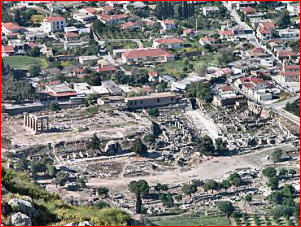
Acrocorinthus, with the ruins of the Bema (a judge's platform, used for tribunals and athletic events) in the foreground
Acrocorinthus, with the ruins of the Bema (a judge's platform, probably used for everything from tribunal to athletic events) in the foreground
"Captivity . . . to the obedience of Christ" is the true freedom. (Those who truly love Christ understand this principle. Romans 6:17-18: "But God be thanked, that ye were the servants of sin, but ye have obeyed from the heart that form of doctrine which was delivered you. Being then made free from sin, ye became the servants of righteousness.") It sounds paradoxical, but real freedom is found in a different kind of "captivity."

People who barricade themselves in fortresses of lies and deception are enslaved to their sin and their evil ideologies. Our goal is the liberation of as many of them as possible. And we can't relinquish the fight or ease off until the battle is completely over.

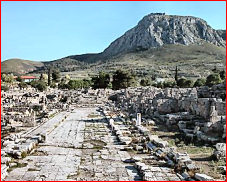
The ruins of Corinth, seen from atop Acrocorinthus

Phil's signature

26 October 2005

No punishment required?

Spurgeon and penal substitution revisited

PyroManiacA couple of Brit-bloggers, Steve and Sven, both noticed Monday's Spurgeon quote and voiced doubts about whether Spurgeon really believed in the penal-substitution view of the atonement.

Steve writes, "Pyromaniac digs up this quote by spurgeon, which he belives [sic] is talking about Penal Substitution. Aside from some amusement at the Victor Meldrewness of it, it’s an excellent, and typical spurgeon quote, talking about Jesus atoning (at-one-ment—reconciliation) death on the cross."

(For Yank readers who wonder what Steve means, Victor Meldrew was an elderly character in the Britcom One Foot in the Grave, known for his ill-tempered grousing.)

Steve then opines: "Interestingly while he talks about a recompence and substititution, he makes no mention of punishment or anything penal. In fact he seems to be fairly clearly talking about the satisfaction model of Atonement (Substitutionary Atonement) which Anselm devloped, before it was developed further by Luther and Calvin into the currently popular penal model."

Actually, in such a context, the recompense Spurgeon spoke of (the payment of which he "fairly clearly" says was "render[ed] to God's justice") is nothing if not punitive. I suppose if you don't understand Spurgeon and aren't familiar with Victorianisms, you might not catch that idea on your initial reading of this particular quote, but for the record, Steve has badly misread what Spurgeon is saying.

Anyway, in a note added after posting, Steve refers his readers to The World of Sven, promising, "Sven says this better."

Sven actually says it much worse: "Spurgeon himself seems to have gotten stuck halfway between Anselm and the classic Reformed position." Sven quotes a sentence from Spurgeon, ("My conscience tells me that I must render to God's justice a recompense for the dishonor that I have done to His law, and I cannot find anything which bears the semblance of such a recompense till I look to Christ Jesus.") and asks:

Doesn't this sound rather more like satisfaction theory rather than the popular version of penal substitution? This is of course slightly problematic, because Anselm (satisfaction theory) and the magisterial Reformers view Christ's death in two very different ways, because of course if Christ makes recompense to God's honour, no punishment is required. (Emphasis added.)

I admit to some amusement at the Arnold Rimmeresque hubris contained in such pronouncements; but Steve and Sven really ought to investigate what Spurgeon actually believed about the atonement before lecturing their readers on the nuances of his view. Spurgeon's view on the atonement was no secret. His outspoken defense of penal substitution was a consistent theme—and not a subtle one—from the beginning of his ministry to his dying gasps at the height of the Downgrade Controversy (in which this very issue of penal substitution was one of the main doctrines in dispute).

Nor would Spurgeon ever have approved of paring back the definition of "at-one-ment" to reconciliation only.

It's extremely irritating that after more than two years of controversy, Steve Chalke and his aficionados still seem blithely ignorant about the historical debate among British Baptists over the doctrine of penal substitution. It's always annoyed me that Chalke, who ministered at Haddon Hall—a chapel founded by Spurgeon's own congregation and named for him—decided to champion this issue, and then has handled the ensuing controversy in such a clumsy and perfunctory way.

Here's a message where Spurgeon explains himself with absolute clarity and without the Victorian euphemisms. Whenever Spurgeon spoke of "substitutionary atonement," here, in his own words, is what he had in mind:

"The doctrine of Holy Scripture is this, that inasmuch as man could not keep God's law, having fallen in Adam, Christ came and fulfilled the law on the behalf of his people; and that inasmuch as man had already broken the divine law and incurred the penalty of the wrath of God, Christ came and suffered in the room, place, and stead of his elect ones, that so by his enduring the full vials of wrath, they might be emptied out and not a drop might ever fall upon the heads of his blood-bought people."

"Christ—Our Substitute" is one of my all-time favorite Spurgeon sermons, because Spurgeon's passion is conveyed in the words. You don't have to know what he actually sounded like to sense the fervor with which he defended the atonement against the Steve Chalkes of his day:

SpurgeonThese are the new men whom God has sent down from heaven, to tell us that the apostle Paul was all wrong, that our faith is vain, that we have been quite mistaken, that there was no need for propitiating blood to wash away our sins; that the fact was, our sins needed discipline, but penal vengeance and righteous wrath are quite out of the question. When I thus speak, I am free to confess that such ideas are not boldly taught by a certain individual whose volume excites these remarks, but as he puffs the books of gross perverters of the truth, I am compelled to believe that he endorses such theology.

Well, brethren, I am happy to say that sort of stuff has not gained entrance into this pulpit. I dare say the worms will eat the wood before there will be anything of that sort sounded in his place; and may these bones be picked by vultures, and this flesh be rent in sunder by lions, and may every nerve in this body suffer pangs and tortures, ere these lips shall give utterance to any such doctrines or sentiments.

There's lots of picturesque and painfully blunt language in this sermon, but if I get started quoting it, I won't know where to stop. It reads like it was aimed at Steve Chalke himself. Read the sermon for yourself. It's a good one.

And, by the way, there are many more where this one came from. Fans of Steve Chalke need to face up to the reality that Spurgeon is no friend of anything Chalke stands for.

Phil's signature

25 October 2005

Real spiritual warfare is not like a round of Doom

Pyromaniac

Ever since Frank Peretti's demon-warfare novels dominated the Christian best-seller lists in the 1980s and '90s, the popular conception of "spiritual warfare" has had the complexion of trashy, mystical, superstitious fantasy.

The ideas of "territorial demons" and fanciful combat strategies like "spiritual mapping," "prayer marching," and similar nonsense have no basis whatsoever in Scripture.

True spiritual warfare is not about territory; it's about truth.

Note how Paul describes spiritual warfare 2 Corinthians 10:3-5: "Though we walk in the flesh, we do not war according to the flesh. For the weapons of our warfare are not carnal but mighty in God for pulling down strongholds, casting down arguments and every high thing that exalts itself against the knowledge of God, bringing every thought into captivity to the obedience of Christ."

Notice: the real spiritual warfare is about imaginations, arguments, knowledge, and thoughts—in other words, belief systems, not real estate. It's a fight for hearts and minds, not a war over cities and nations.

Phil's signature

24 October 2005

Spurgeon on substitutionary atonement

Spurgeonfrom chapter 12, "The Minister in These Times"
in An All-Round Ministry

Spurgeon responds to men in his day who thought the doctrine of penal substitution wasn't genteel or sophisticated enough.

Those who set aside the atonement as a satisfaction for sin also murder the doctrine of justification by faith. They must do so. There is a common element which is the essence of both doctrines; so that, if you deny the one, you destroy the other.

Modern thought is nothing but an attempt to bring back the legal system of salvation by works. Our battle is the same as that which Luther fought at the Reformation. If you go to the very ground and root of it, grace is taken away, and human merit is substituted. The gracious act of God in pardoning sin is excluded, and human effort is made all in all, both for past sin and future hope. Every man is now to set up as his own savior, and the atonement is shelved as a pious fraud.

I will not foul my mouth with the unworthy phrases which have been used in reference to the substitutionary work of our Lord Jesus Christ; but it is a sore grief of heart to note how these evil things are tolerated by men whom we respect.

We shall not cease, dear brethren, in our ministry, most definitely and decidedly to preach the atoning sacrifice; and I will tell you why I shall be sure to do so. I have not personally a shadow of a hope of salvation from any other quarter: I am lost if Jesus be not my Substitute. I have been driven up into a corner by a pressing sense of my own personal sin, and have been made to despair of ever doing or being such that God can accept me in myself.

I must have a righteousness, perfect and Divine; yet it is beyond my own power to create. I find it in Christ: I read that it will become mine by faith, and by faith I take it. My conscience tells me that I must render to God's justice a recompense for the dishonor that I have done to His law, and I cannot find anything which bears the semblance of such a recompense till I look to Christ Jesus. Do I not remember when I first looked to Him, and was lightened? Do I not remember how often I have gone as a sinner to my Savior's feet, and looked anew at His wounds, and believed over again unto eternal life, feeling the old joy repeated by the deed?

Brethren, I cannot preach anything else, for I know nothing else. New dogmas may or may not be true; but of the truth of this doctrine, I am sure.

If anybody here is preaching the atonement, but does not like it, I dare not advise him to cease preaching it, but the words tremble on my lips. I am firmly persuaded that the unwilling or cold-hearted preacher of any doctrine is its worst enemy. It comes to this, in the long run, that the wounds of truth in the house of its false friends are worse than those given it by foes. If you do not love the cross in your heart's core, you had better let it alone. I can truly say that I preach the atonement con amore, with all my heart.

Some seem to think that we poor souls, who are of the Puritanic school, are "cabin'd, cribb'd, confined" by harsh dogmas, from which we would gladly escape. They imagine that we have to check every rising aspiration of our nobler selves, so as to preserve the tyranny of a certain iron system. John Calvin is supposed to ride us like a nightmare, and we lead dogs' lives under his lash.

Brethren, it is far otherwise. Little do these slanderers know of our happiness and peace. If they feel more joy in preaching than we do, their felicity is great; but, from their tone and style, I should greatly question it. Observers will have noticed that the joyous element has gone out of many pulpits. The preacher does not enjoy his own subject, and seldom speaks of having been in the Spirit while he was discoursing. He likes twenty minutes' preaching a great deal better than forty; and he is peculiarly apt to merge his two week-night services into one.

Nobody enjoys modern doctrine, for there is nothing to enjoy. The people have to do their best with that soup of which our friend spoke last night so admirably,—the soup made from a borrowed bone, which had been lent out for a similar purpose on six previous days, so that the flavor of meat no longer remained upon it.

No, my brothers; let our opponents dismiss from their minds all pity for our enslaved condition under the old gospel. We are the free men, whom the Lord makes free, and all are slaves besides.

I would like to rise from my bed, during the last five minutes of my life, to bear witness to the Divine sacrifice and the sin-atoning blood. I would then repeat those words which speak the truth of substitution most positively, even should I shock my hearers; for how could I regret that, as in Heaven my first words would be to ascribe my salvation to my Master's blood, my last act on earth was to shock His enemies by a testimony to the same fact?

C. H. Spurgeon

Phil's signature

22 October 2005

Pacifism and Christian warfare

...Summing up

It should be clear by now that I oppose strict pacifism in principle.
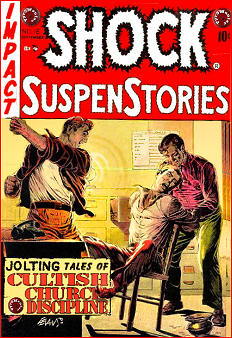
I especially object to the jejune and naive types of "Christian pacifism" that try to turn Matthew 5:39 ("resist not evil") into a rigid absolute—making a wooden, literal interpretation of that text (and its cross-references) the controlling hermeneutical principle for the New Testament while canonizing non-violence as the supreme moral value.

To recap: In matters of national defense and criminal justice, "the sword" (a biblical expression for the use of deadly force) is sometimes an appropriate remedy against evildoers, and rulers who use the sword rightly do so as God's ministers for good (Romans 13:3-4). Moreover, when the government implicitly delegates authority to an individual for wielding the sword in self-defense, he has every moral right to use force.

Moving on...

On the other hand, I can't think of a single instance in which it would be appropriate for the church or her leaders to bear a sword or use violent means of any kind as part of their ministry. Although Christian life and ministry are often portrayed in Scripture as warfare, it's not a war against flesh and blood (Ephesians 6:12).

"For though we walk in the flesh, we do not war after the flesh: (For the weapons of our warfare are not carnal, but mighty through God to the pulling down of strong holds)" (2 Corinthians 10:3-4). Paul is saying that Christian warfare is not a carnal battle. It's not a battle for lands and cities. It's not a personal conflict against other people. It's a battle for the truth.

Biblical Christianity is not and never has been like Islam, spreading its influence at the point of a sword or with threats of force or acts of terrorism. Although history includes several sad episodes of wars and crusades and inquisitions that have been carried out by men who claimed to be acting in the name of Christ, that has never been the tactic by which the true church has sought to increase her influence.

Our battle is not against flesh and blood. In the words of Spurgeon, "For the church of God ever to avail itself of force would be clean contrary to the spirit of Christianity: for the Christian bishop to become a soldier, or employ the secular arm [of military force], would seem the very climax of contradiction. A warrior ambassador is a dream of folly."

So Paul makes it clear in 2 Corinthians 10 that he is not talking about the actual use of force. He's at war, but it is not a carnal war. It's a spiritual conflict. This is not a battle over territory, but a fight for the minds and hearts of people.

Next week, I want to take up this subject of spiritual warfare and examine the context of 2 Corinthians 10:5 carefully. I hope to relate our duty in spiritual warfare to the issues of pacifism and militancy. Should be a lively discussion.

Odds 'n' ends

Not desiring to delve too much into the sort of self-referential, solipsistic specifics that send CenturiOn into spasms, I nonetheless need to inform my readers of a few changes I have planned for PyroManiac:

  1. I'll no longer be doing the regular "Monday Menagerie" posts. These have proved to be too labor-intensive for my weekends.
  2. Instead, I'll try to format one or two Spurgeon items for The Spurgeon Archive each weekend, and Monday's post will feature a pithy excerpt from that week's sermon or article. This will also maximize the use of my time and help me in the process of adding Spurgeon material to my Web site.
  3. From time to time, I'll make a special post in the genre of the old "Monday Menagerie" items. I do enjoy writing those, but once a week is simply too much to promise. It was becoming a perfect ball and chain.
  4. Yes, I really am having a few die-cut vinyl bumper stickers made from my new logo. Unfortunately, they are too expensive to produce in large numbers. They're going to be hard to come by. I'll have to devise a contest or something to give a few of them away. Suggestions would be appreciated.